As a steel plate supplier who’s spent nearly a decade on the shop floor and in client consultations, I get asked this question at least twice a week: “Can you weld two different grades of steel plates together without ruining the job?” It’s not a trivial question—mixing steel grades incorrectly leads to weak joints, premature corrosion, or even catastrophic failures in structures like bridge trusses, industrial pressure vessels, and agricultural equipment. I’ve seen it happen first-hand: a farming company once tried to weld mild carbon steel to high-strength steel for a custom hay baler frame, and the joint snapped mid-season, costing them $20,000 in downtime alone. That’s why I’ve compiled what I’ve learned from years of testing, troubleshooting, and working with welders across industries—no textbook jargon, just practical, proven steps to make dissimilar steel welding work. Steel Plate

First, let’s start with the basics: not all steel is created equal, and their core differences dictate almost every part of the welding process. The most common steel grades we supply fall into two categories: carbon steels (mild, high-strength low-alloy, or HSLA) and stainless steels (austenitic, martensitic, ferritic). The biggest variables between these grades are carbon content, alloying elements like chromium and nickel, and hardenability—how quickly they turn brittle when heated and cooled. For example, mild A36 steel (a go-to for structural work) has a carbon content around 0.29% max, while 4140 alloy steel, used for heavy machinery, hits 0.43% carbon, and 304 stainless steel has 18% chromium and 8% nickel. When welding two of these, the goal is to bridge those differences instead of letting them create defects.
The first critical step before you even strike an arc: define the “dissimilar pair” and its specific challenges. Every combination brings a unique set of risks, so there’s no one-size-fits-all method. Let’s break down the three most common pairs we see at our shop, and how to handle each.
The first and most common pair: mild carbon steel (A36, A572 Grade 50) to HSLA steel (A514, A572 Grade 65). HSLA steels get their strength from small amounts of niobium, vanadium, or titanium, which makes them far harderenable than mild carbon steel. Welding them wrong often leads to a hard, brittle heat-affected zone (HAZ) on the HSLA side, where the heat of the welding arc changes the steel’s microstructure and makes it prone to cracking. For this pair, the gold standard method is stick welding (SMAW) with a low-hydrogen, mild steel electrode—think E7018. Wait, don’t reach for the same electrode you use for welding two A36 plates. The low-hydrogen coating on E7018 prevents hydrogen-induced cracking, which is the biggest risk here. You’ll also need to preheat the HSLA side to 250–350°F before welding, and keep the interpass temperature (the temperature between weld passes) below 500°F. I learned this trick from a senior welder at a bridge fabricator: if you don’t preheat, the rapid cooling of the HSLA side after welding creates a brittle layer that can crack under the weight of heavy traffic or machinery. Post-weld, stress-relieve the joint by heating it to 1,100°F and letting it cool slowly over 8–10 hours—this takes the tension out of the weld and HAZ. We supply pre-cut preheat strips for this exact purpose, so our clients don’t have to guess how to heat the edge evenly.
The second pair: mild carbon steel to austenitic stainless steel (304, 316). This one trips up even experienced welders because of the mismatch in thermal expansion. Austenitic stainless steel expands almost twice as much as carbon steel when heated, so when the weld cools, it pulls tight, leading to distortion or even cracking at the joint. Another risk is “carbon migration”: carbon from the mild steel side diffuses into the stainless steel weld metal, creating hard, brittle martensite that weakens the joint. To avoid this, you need a “transition layer” of weld metal that acts as a bridge between the two. Most welders use E309L electrodes for this pair. The extra chromium and nickel in 309L create a weld metal that’s compatible with both carbon and austenitic stainless steel, and the low carbon content prevents carbon migration. A pro tip I share with our clients: run a thin “bypass” weld bead on the carbon steel side before welding the joint. This dilutes the carbon content near the joint, so less carbon can move into the stainless steel. Also, use a low-heat input welding process—like TIG welding (GTAW) with a small diameter filler rod, or MIG welding (GMAW) with a 0.035-inch wire. Too much heat makes the distortion worse. I once had a food processing client that tried to weld A36 to 304 stainless for a conveyor frame, and they used too high a heat input—within a month, the frame warped so badly the conveyor jammed. That’s when we started offering free welding consultation for clients who buy our steel plates, so they don’t make those mistakes.
The third, trickiest pair: martensitic stainless steel (410, 420) to mild carbon steel. Martensitic stainless is high in carbon and chromium, so it’s super hardenable—if you heat it and cool it fast, it turns brittle as glass. Welding it to mild carbon steel? The risk of cold cracking is through the roof. For this pair, preheating is non-negotiable—you need to heat the martensitic side to 400–500°F before welding, and use a preheat blanket to keep it hot throughout the process. Stick with E309L electrodes again, same as the carbon-to-austenitic pair, because they resist cracking. Post-weld, you have to stress-relieve the joint at 1,200°F—higher than the other pairs, because martensitic steel needs more time to soften its brittle microstructure. I always warn clients about this: skip the preheating, and you’ll end up with a joint that looks good on the surface, but will crack the first time you put load on it. We’ve had to rework three jobs in the last two years where contractors cut corners on preheating for this pair, so now we include a free preheat guide with every order of martensitic stainless plates.
Wait, but what about other pairs? Like HSLA to stainless, or two different stainless grades? The same core rules apply: identify the biggest risk (cracking, distortion, carbon migration), pick the right filler metal, control heat input, and preheat when needed. One of our recent clients, a construction company, needed to weld A514 HSLA steel to 316 stainless for a offshore platform railing. We worked with their welding foreman to test a small sample first—always test a sample before welding the actual part. That’s a step I can’t stress enough. Testing lets you adjust preheat temperature, filler metal, and heat input before committing to the full job. Their first test sample had a tiny crack on the HSLA side, so we upped the preheat to 300°F and switched to E7018 electrode, and the second sample passed their non-destructive test (NDT) with flying colors.
Now, let’s talk about common mistakes I see all the time. The biggest one is using the same filler metal you’d use for welding two identical grades. For example, welding A36 to 4140 with an E7018 electrode sounds right, but E7018 is for mild steel, not high-carbon alloy steel. That leads to a weld that’s too soft, and the joint will fail because the weld can’t match the strength of the 4140. Another mistake is skipping preheating. A welder once told me, “Preheating is a waste of time— I’ve welded these plates without it and it worked.” Maybe it worked that time, but it’s a gamble. We’ve seen joints that lasted 6 months without preheat, then failed catastrophically. Why? Load cycles, temperature changes, even corrosion can expose a weak joint that looks fine on inspection. And don’t forget post-weld cleaning. If you’re welding stainless to carbon steel, any carbon steel debris left on the stainless side will cause corrosion. We supply stainless steel cleaning kits as an add-on, because a clean joint is a long-lasting joint.
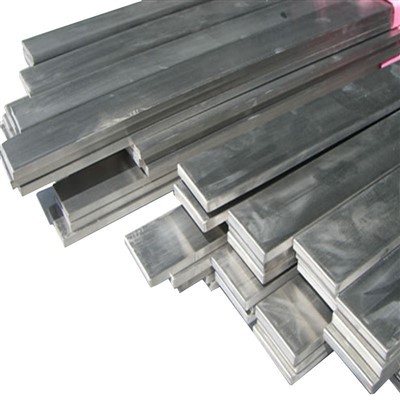
As a steel plate supplier, our job isn’t just to cut and deliver steel—it’s to make sure our customers’ projects don’t fail. That’s why we don’t just sell plates; we offer free, no-obligation welding consultations, provide pre-cut preheat strips and cleaning supplies, and even work with welders to test custom dissimilar pairs. Last quarter, we partnered with a custom trailer builder who needed to weld 50 ksi steel to 100 ksi steel for heavy-duty dump trailers. We helped them test three different filler metals, adjusted their preheat schedule, and even brought a sample to their shop so their welders could practice on it before the full run. They saved $15,000 in rework costs because they followed those steps.
Stainless Steel Bar If you’re working on a project with dissimilar steel plates, don’t guess at the process. Too many contractors cut corners on welding, only to end up with delays, safety risks, and wasted material. We’re here to help you get it right, from the first consultation to the final delivery. Reach out to our team to discuss your project, share your steel grades, and get personalized advice tailored to your needs. Whether you need guidance on preheating, filler metal selection, or testing a sample, we’ll walk you through every step so your dissimilar steel joints are strong, durable, and built to last.
References
- American Welding Society. (2020). AWS D1.1/D1.1M: Structural Welding Code – Steel. American Welding Society.
- Lippold, J. C., & Kotecki, D. J. (2005). Welding Metallurgy and Weldability of Stainless Steels. John Wiley & Sons.
- Davis, J. R. (Ed.). (2001). Weldability of Steels. ASM International.
- European Committee for Standardization. (2018). EN 1090-2: Execution of steel structures and aluminium structures – Part 2: Technical requirements for steel structures. European Committee for Standardization.
- Messler, R. W. Jr. (2004). Principles of Welding: Processes, Physics, Chemistry, and Metallurgy. John Wiley & Sons.
Shanxi Midas Industrial Co., Ltd.
We’re known as one of the most professional steel plate manufacturers and suppliers in China. With abundant experience, we warmly welcome you to buy cheap steel plate made in China here from our factory. For price consultation, contact us.
Address: 28th, Huanqiu Jinrong Zhongxin, Xieyuan Road, Changfeng Business District, Taiyuan City, Shanxi Province, China
E-mail: midassteel@163.com
WebSite: https://www.midassteel.com/
