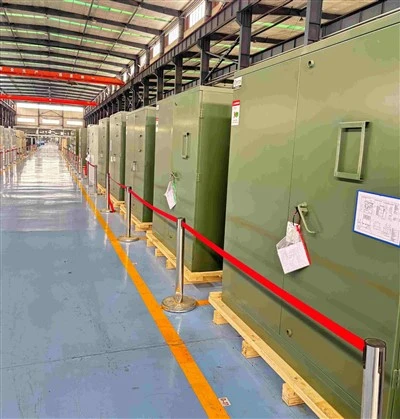
Hey there, if you’ve ever stood near a residential neighborhood power pole or walked through a commercial business park and glanced at that big, boxy green (or sometimes gray) unit sitting on a concrete pad, that’s a pad mounted transformer—our wheelhouse here as a pad mounted transformer supplier. I get it, when you’re working on a new build, upgrading your commercial setup, or even just troubleshooting why your shop’s lights flicker at 3PM, terms like “secondary voltage” can feel like someone’s speaking a different language. Today, let’s break this down straight, no stuffy engineering jargon, and tie it to why this exact number matters for you. Pad Mounted Transformer

First off, let’s get the basics straight to ground this—literally. A pad mounted transformer’s whole job is to move electricity from where it’s generated to where you actually use it. Power plants pump out electricity at super high voltages, like 115,000 volts or way higher, because moving power over long distances at lower voltages wastes way too much energy as heat (think of it like carrying water through a narrow pipe vs a wide one). But we can’t plug a coffee maker, a commercial fridge, or even a whole office building into 115kV— that’d turn everything into a firecracker. That’s where transformers come in: they “step down” that super high primary voltage to a level that’s safe for end use. The secondary voltage is exactly that: the output voltage of the transformer, the juice that comes out of the transformer’s secondary terminals and feeds your homes, shops, and factories.
Wait, but why does every pad mounted transformer have a specific secondary voltage? It’s not random. That number is matched exactly to what the load it’s powering needs. For residential areas around North America (where most of our clients are), the standard secondary voltage for single-family homes is typically 120/240 volts split-phase. Let’s unpack that: that means the transformer outputs two 120-volt legs, and if you connect them across both, you get 240 volts—perfect for big stuff like dryers, ovens, or EV chargers that need more oomph. For apartments or small commercial spaces, you might see 208Y/120 volts three-phase, which works for multiple tenants or small retail. Larger businesses, like a grocery store or a industrial workshop, could run on 480Y/277 volts, which powers heavy machinery and lighting.
Here’s the thing I see a lot of new clients mix up: secondary voltage isn’t just a random spec number printed on a sheet. It’s the whole reason your power works. If we pick the wrong one? You end up with lights that are too dim, appliances that burn out, or even circuit breakers tripping nonstop. Last year, we had a small café client call us panicking because their old transformer gave out mid-rush. They grabbed a used transformer from a buddy, didn’t check the secondary voltage, and it put out 240 single-phase instead of the 208 they needed for their commercial espresso machine and walk-in fridge. In two days, they fried over $2k worth of equipment just because that number was off. That’s the kind of mistake we help clients avoid upfront, not fix after the fact.
Now, how do we set that secondary voltage correctly when we build a pad mounted transformer? Let’s keep it simple. Inside the transformer, there are two sets of copper coils. The primary coil is connected to the high-voltage power line coming from the utility, and the secondary coil is what feeds your site. The voltage ratio between those two coils is exactly what sets the secondary voltage. If you have a primary voltage of 7,200 volts (super common for residential feeders) and a turns ratio of 60:1, you get 120 volts on the secondary. Tweak that ratio a tiny bit, and you get 240, 208, whatever the client needs. We also add tap changers on most of our transformers, just to cover tiny utility line fluctuations—like if the feeder voltage is a little higher or lower than standard, we can adjust the secondary voltage by a few percentage points so your gear doesn’t get messed up.
I get it, as a client, you’re probably not here to memorize coil ratios. You need to know what secondary voltage you actually need for your project. Let’s run through a quick cheat sheet that works for most of our common clients: if you’re building a single-family home, your secondary voltage is 120/240 split-phase. If it’s a 10-unit apartment building, go with 208Y/120 three-phase. For a 10,000 sq ft retail space or small warehouse, 480Y/277 is the sweet spot. And if you’re doing a heavy industrial shop with big motors, we can size up to 600 volts, no problem.
A lot of new people ask: “Does secondary voltage ever change after the transformer is installed?” Good question. Short answer: usually not on purpose, but it can shift a tiny bit over time due to things like wear on the coils, or the utility adjusting their primary line voltage (that’s rare, but it happens). If you notice your lights are flickering more than usual, or your HVAC is running weird, a quick test of the secondary voltage with a multimeter will tell you if the transformer’s off, and we can come out to check or adjust it. That’s part of the service we offer our ongoing clients, not just selling a box and disappearing.
Wait, let’s bust a common myth here: some folks think the secondary voltage is just “120 volts” no matter what. That’s only half the story. The “Y” in three-phase systems (like 208Y/120) stands for wye configuration, which means there’s a neutral wire that splits the voltage between the phases, so you get both 120 for small plugs and 208 for big loads. Delta configurations (like 240 delta) are less common for new builds now, but we still stock those for older sites that need replacements. At the end of the day, the secondary voltage is tailored to your specific site, not a one-size-fits-all number.
As a pad mounted transformer supplier, this is what I always tell my clients: when you’re planning your project, don’t skip the step of confirming your required secondary voltage early on. It’s way cheaper to get that spec right during the design phase than to rip out a wrong transformer and replace it later. We work with electricians, general contractors, and even property owners directly to walk through their needs, figure out exactly what secondary voltage they need, and build a transformer that fits their site, their power load, and their budget.
I’ve been in this game for over 15 years now, and the number of calls I get from people who messed up the secondary voltage? It’s wild. Last quarter, a solar installation company bought a transformer from a big box supplier because it was cheaper, didn’t realize their off-grid setup needed a secondary voltage that matched their inverter, and ended up with a $10k do-over. We ended up re-working their unit for half the cost of replacing it, but that was a hassle they didn’t need. That’s why we take the time to ask the right questions: what’s your site’s primary feeder voltage? How many units or lights do you have? What big loads (EV chargers, fridges, motors) are you running? All that goes into nailing the secondary voltage dead on.
Another thing to note: pad mounted transformers are sealed units, right? They’re built to sit outside, in all weather, so you don’t have to mess with them much once they’re installed. That’s why getting the secondary voltage right the first time is so important—you don’t want to have to dig up the whole unit just to adjust a spec down the line. All our transformers are factory-tested, too: before they leave our shop, we hook them up to a test power source and verify the secondary voltage is exactly within 1% of the spec we agreed on. No guesswork, no surprises.
Let’s wrap this up for anyone who’s still going, maybe you’re mid-project and realizing you need to sort out a transformer. The secondary voltage of a pad mounted transformer is simply the usable output electricity that comes out of the box to power your site—tailored to exactly what your gear needs, set by the coil ratio inside, and critical to making sure your power works safely and reliably.
If you’re working on a residential build, upgrading a commercial space, or just need to replace an old transformer and aren’t sure what secondary voltage you need, hit us up. We’ll walk through your project, answer all your questions, and help you get a transformer that fits your needs without the hassle of messing up the specs. Don’t let a wrong voltage mess up your project—get it right the first time, with the team that actually builds these things every day.
Pole Mounted Transformer Oil Tank References
- American Public Power Association. (2021). Pad-Mounted Transformer Basics for Utility and End-Use Customers. APPA Press.
- IEEE Std C57.12.00-2020. Standard for General Requirements for Liquid-Immersed Distribution, Power, and Regulating Transformers. Institute of Electrical and Electronics Engineers.
- U.S. Department of Energy. (2022). Commercial Power Distribution Equipment Guide: Transformers for Small Businesses. DOE Office of Energy Efficiency & Renewable Energy.
Nantong Zhihe Electric Co., Ltd.
As one of the most professional pad mounted transformer manufacturers and suppliers in China, we’re featured by quality products and low price. Please rest assured to wholesale cheap pad mounted transformer made in China here from our factory. Customized orders are welcome.
Address: NO.202 Jianghai West Road, Hai’an Town, Hai’an City, Jiangsu Province
E-mail: chiaragao123@gmail.com
WebSite: https://www.ntzhelectric.com/
