How to make moxa sticks and moxa wool at home?
As a supplier in the Moxa Sticks and Moxa Wool Series, I’ve witnessed firsthand the growing popularity of moxibustion, an ancient therapeutic practice deeply rooted in traditional Chinese medicine. Moxibustion involves burning moxa, a processed herb, near the skin to stimulate specific acupuncture points, promoting health and well – being. Making moxa sticks and moxa wool at home can be a rewarding and cost – effective way to engage with this practice. In this blog, I’ll share with you a step – by – step guide on how to create these essential moxibustion materials right in your own home. Moxa Sticks and Moxa Wool Series
Step 1: Sourcing the Right Mugwort
The foundation of high – quality moxa sticks and moxa wool is the mugwort plant, scientifically known as Artemisia argyi. When sourcing mugwort, you have a few options. You can either harvest wild mugwort or purchase it from a reliable herbal supplier.
If you choose to harvest wild mugwort, make sure you can accurately identify the plant. Mugwort has a distinct fragrance and its leaves are green on the upper side and silver – white and furry on the lower side. Harvest it in the summer, usually from June to August, when the plant’s essential oils are at their peak. Cut the mugwort close to the base, leaving enough for the plant to regrow.
When buying from a supplier, look for mugwort that is organically grown and free from pesticides and other contaminants. High – quality mugwort will have a strong, pleasant aroma and a vibrant color.
Step 2: Drying the Mugwort
Once you have your mugwort, the next step is to dry it. Drying is crucial as it reduces the moisture content, making the mugwort easier to process and increasing its burning efficiency.
Spread the harvested mugwort in a thin layer on a clean, dry surface. Choose a well – ventilated area away from direct sunlight. If you’re in a hurry, you can also dry the mugwort in a dehydrator set to a low temperature (around 40 – 50°C). Stir the mugwort occasionally to ensure even drying. It usually takes about one to two weeks for the mugwort to dry completely. You’ll know it’s ready when the leaves become brittle and crumble easily between your fingers.
Step 3: Removing the Stems and Impurities
After the mugwort is dry, it’s time to separate the leaves from the stems and remove any other impurities. This can be done by hand or with a simple tool.
For a small – scale production, you can sit down and gently pull the leaves off the stems. This method allows you to have more control and ensures that only the purest parts of the mugwort are used. If you have a larger quantity, you can use a rolling pin to crush the dried mugwort. Then, sift the crushed material through a fine – mesh sieve. The leaves will pass through the sieve, while the stems and larger impurities will be left behind. Repeat this process a few times to get a cleaner product.
Step 4: Processing the Mugwort into Moxa Wool
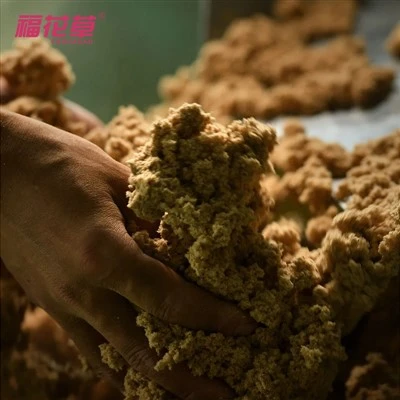
The next stage is to turn the cleaned mugwort into moxa wool. This involves further refining the mugwort to make it soft, fluffy, and combustion – friendly.
You can use a traditional manual method or a mechanical approach. For the manual method, take a small handful of the cleaned mugwort and place it between two pieces of cloth. Then, gently roll and knead the mugwort with your hands. As you do this, the fibers will start to separate and become softer. Continue this process until the mugwort turns into a fine, wool – like substance.
If you prefer a mechanical method, you can use a Chinese medicine grinder or a blender. Pulse the mugwort in short bursts to avoid over – processing. After grinding, sift the moxa again through a fine sieve to remove any remaining coarse particles.
Step 5: Making Moxa Sticks
Once you have your moxa wool, it’s time to make moxa sticks. You’ll need some moxa rolling paper, which is usually made from rice or mulberry bark and is very thin and burnable.
Cut the rolling paper into appropriate sizes, typically around 20 – 30 cm in length. Place a strip of the moxa rolling paper on a flat surface. Spread a layer of moxa wool evenly along the long side of the paper, leaving about 1 – 2 cm of paper uncovered at one end. Then, start rolling the paper tightly around the moxa wool, like making a cigar. Use a little water or starch paste to seal the edge of the paper.
You can make moxa sticks of different diameters according to your needs. Thicker sticks burn more slowly and are suitable for longer moxibustion sessions, while thinner sticks are more flexible and can be used for more precise applications.
Quality Control and Storage
After making your moxa sticks and moxa wool, it’s important to conduct a simple quality check. Good – quality moxa wool should be soft, fluffy, and have a uniform color. Moxa sticks should burn evenly, without going out easily, and produce a gentle, warming smoke.
Store your moxa sticks and moxa wool in a cool, dry place. You can use air – tight containers to prevent them from absorbing moisture from the air, which could affect their burning performance.
Advantages of Making Moxa at Home
Making moxa sticks and moxa wool at home has several benefits. Firstly, it allows you to have full control over the quality of the materials. You can choose the freshest and purest mugwort, free from any harmful chemicals. Secondly, it’s a cost – effective option in the long run. Buying pre – made moxa products can be expensive, especially if you use them frequently. Finally, it’s a great way to connect with the traditional practice of moxibustion on a deeper level.
Why You Might Still Consider Buying from a Supplier
While making moxa at home can be a fun and rewarding experience, there are also reasons why you might want to purchase from a professional supplier like us.
We have years of experience in processing mugwort, and we use advanced techniques and equipment to ensure the highest quality of our products. Our moxa sticks and moxa wool are carefully crafted to meet strict standards. They have consistent burning characteristics, ensuring a reliable moxibustion experience.
In addition, we source mugwort from the best regions known for their high – quality plants. This means that our products are rich in the essential oils and active compounds that are beneficial for moxibustion. We also offer a wide range of moxa products, including different sizes and types of moxa sticks and moxa wool, to meet the diverse needs of our customers.
Contact for Procurement
Moxibustion Treasure If you’re interested in purchasing high – quality moxa sticks and moxa wool, we’d love to talk to you. Our products are the result of strict quality control and careful craftsmanship. Whether you’re an individual practitioner, a wellness center, or a reseller, we have the right products for you. Please contact us to discuss your procurement needs and we’ll be happy to provide you with detailed information and competitive quotes.
References
- Chen, J. K., & Chen, T. Y. (2004). Chinese Medical Herbology and Pharmacology. Art of Medicine Press.
- Ellis, A., Wiseman, N., & Boss, K. (1991). Fundamentals of Chinese Acupuncture: A Modern Introduction to Traditional Theory and Practice. Paradigm Publications.
- Maciocia, G. (1989). The Foundations of Chinese Medicine: A Comprehensive Text for Acupuncturists and Herbalists. Churchill Livingstone.
Jiaxing Yuanfan Imp. & Exp. Co., Ltd.
As one of the most professional moxa sticks and moxa wool manufacturers in China, we’re featured by quality products and good service. Please rest assured to wholesale high-grade moxa sticks and moxa wool made in China here from our factory. Contact us for quotation.
Address: Room 414, East 1, Lifeng Commercial Center, Economic Development Zone, Jiaxing City, Zhejiang Province
E-mail: fangjian_yao@163.com
WebSite: https://www.yuanfanmugwort.com/
