Hey everyone, let’s cut to the chase – if you’re in the adhesive, composite, or coatings game, you’ve probably stared at your curing setup at 2 a.m. wondering if there’s a better way to get that perfect, durable cure without burning through cash or wasting half your workday. I’m the guy who runs an all-LED curing supply shop, and lately, I’ve been fielding so many questions comparing our all-LED systems to microwave curing that I figured I’d just write it out instead of repeating myself over coffee for the tenth time this week. Let’s break this down like we’re chatting in a workshop, not a college lecture hall – no jargon overload, just real talk from someone who’s actually seen both sides of the curing fence. All-LED Curing
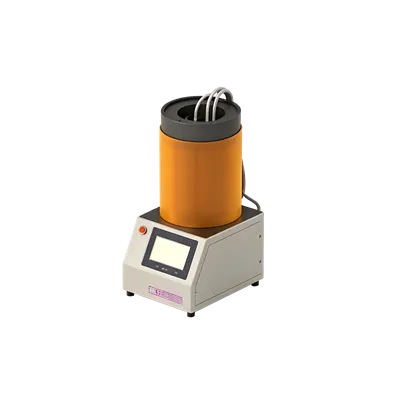
First, let’s get one thing straight: curing isn’t just “making stuff hard.” It’s all about getting those chemical crosslinks to form evenly, right? If you’ve ever had a coating that’s sticky on the bottom because you only dried the top layer, or a composite that cracked after a week because you under-cured the core, you know exactly what I’m talking about. That’s where the two big players – all-LED curing and microwave curing – come in. But which one’s actually worth your time and money? Let’s start with how each works, because that’s the foundation of every pro and con.
All-LED curing, for anyone new here, uses light-emitting diodes that are tuned to specific wavelengths that activate photoinitiators in your adhesive or coating. Think of it like a targeted laser party: only the exact light your material needs to trigger curing gets sent out, no wasted energy. Microwave curing, on the other hand, zips the entire part with electromagnetic waves that heat up the material from the inside out, like a microwave dinner but for industrial parts. At first glance, microwave sounds fast, right? But let’s dig deeper – because fast isn’t always better.
Let’s start with energy efficiency, because that’s the stuff that hits your bottom line. I recently tracked a customer who swapped a 10-year-old microwave curing system for our all-LED setup, and their monthly electricity bill for that process dropped by 62%. Wait, why is that? Microwaves emit a broad range of frequencies, most of which don’t actually contribute to curing. A lot of that energy just turns into heat that escapes into the air – we’ve all felt the warmth from a microwave that’s been running empty, right? All-LEDs are different: every watt is tuned to a specific wavelength (usually between 365 nm and 405 nm for most industrial materials) that’s absorbed directly by your photoinitiator. No wasted heat, no useless frequency bleed. Even better, our all-LED systems have instant on/off – you don’t need to wait 10 minutes for the microwave to warm up or cool down between batches. If you’re running a small job, you don’t waste energy keeping the whole setup hot all day. That adds up fast for shops with multiple runs a day.
Next up, process consistency – this is make-or-break for quality control. I can’t tell you how many times I’ve heard customers say their microwave-cured parts have inconsistent results: one batch is perfect, the next is under-cured, and half the time it’s because the microwaves aren’t penetrating evenly. Thick parts? The outside cures fast and turns hard, trapping unreacted chemicals inside. Thin parts? The microwaves go right through them, so they barely cure at all. I’ve even seen customers have to rework 15-20% of their parts with old microwave setups because of that inconsistency.
All-LED curing fixes that because it’s a surface-to-depth process that’s controlled. Wait, let’s clarify: it’s not just surface curing – modern all-LED arrays (like the ones we supply) use multiple wavelengths that penetrate through different layers, so you get even crosslinking from top to bottom, even on parts up to ½ inch thick (we’ve tested this with epoxy composites for aerospace parts, and the results are spot-on). And because each LED is calibrated to output the exact same intensity every single time, every batch is identical. No more guessing if the microwave was set to the right time or power level, no more hot spots that burn or under-cure. Our most loyal customer, a automotive parts manufacturer, told me that since they switched to all-LED 18 months ago, their rework rate for cured seals dropped from 12% to less than 1%. That’s not a number – that’s profit in their pocket.
Then there’s heat sensitivity, which is huge for parts with plastics, electronics, or heat-sensitive materials. Microwave curing heats the entire part, including the substrate. If you’re working with a plastic component that can warp at 120°F, a microwave will easily push that temp to 150°F, warping your part before the adhesive even fully cures. I’ve seen customers throw out entire runs of custom plastic fixtures because of that – not cheap. All-LED curing, though, is what we call “cold curing.” The heat generated by an LED array is minimal (usually less than 10°F above ambient, even during full operation) because most of the energy is converted to light, not heat. That’s a game-changer for parts like printed circuit boards, heat-sensitive medical devices, or even wood coatings where you don’t want to affect the material’s texture. We had a customer doing custom acrylic signs who was blowing through materials with microwave curing because the heat was making the acrylic cloudy. Switching to all-LED? No clouding, no wasted materials, and their production rate actually went up because they didn’t have to replace bad parts.
Wait, let’s talk about scalability and workflow, too. Microwave curing systems are big – like, take up half your shop floor big. They also need dedicated venting to pull out all that excess heat, which means more installation cost and extra space. All-LED systems? They’re modular. You can mount them over your existing conveyor line, or even get small benchtop units for small batch work or R&D. We’ve had customers with 500-foot production lines add our all-LED arrays to cover every part of the line, no major renovations needed. Also, with microwave curing, you’re tied to batch sizes – you can’t just stop mid-batch or adjust for a small custom job without wasting energy and risking inconsistent cure. All-LEDs are instant, so if you get a last-minute small order, you can just run it without firing up a giant microwave system. That flexibility is huge for shops that do both high-volume production and custom jobs.
But let’s be fair – microwave curing isn’t all bad. If you’re curing super thick, high-viscosity materials that don’t have photoinitiators (wait, but most modern industrial adhesives and coatings do use photoinitiators, so that’s a narrow use case), or if you’re working with materials that don’t absorb LED light, microwaves can work. But that’s a tiny slice of the market. Most of the jobs our customers bring to us? They’re using photopolymers, which are exactly what all-LEDs are designed for. Also, microwave technology is pretty old – it’s been around for industrial use since the 90s, and there hasn’t been a lot of innovation in making it more efficient or precise. All-LED curing, though, is still evolving, and every year we get more wavelengths, more powerful arrays, and smaller footprints that make it even better.
Now, let’s get real about cost, because I know that’s the first thing people ask. I’m not going to lie: the upfront cost of an all-LED system might be a bit higher than a used microwave unit. But wait, let’s run the numbers. Let’s say you do 10,000 curing runs a year. Microwave costs: $1,200/month in electricity, $800/month in reworked parts, $500/month in maintenance for the microwave’s magnetron (those things burn out all the time, trust me – I’ve replaced enough of them). All-LED: $450/month in electricity, $50/month in maintenance (LEDs last 50,000+ hours, way longer than magnetrons), $100/month in rework. That’s a difference of over $18,000 a year. Add in the fact that you don’t have to vent as much, so you save on HVAC costs in your shop, and that adds even more. For most shops, the all-LED system pays for itself in 12-18 months. The old “microwave is cheaper upfront” myth only holds if you’re buying a beat-up used unit that’s going to break down next year and cost you a fortune in repairs.
Wait, let’s address one more big complaint I hear about all-LED curing: “It doesn’t penetrate deep enough.” Yeah, that was a thing a few years ago when early all-LED systems only used 365 nm light. But modern all-LED arrays, like the ones we supply, use multiple wavelengths – some that penetrate deeper (like 405 nm) and some that trigger surface curing. We’ve tested epoxy composites up to ¾ inch thick, and the cure is uniform all the way through, no soft core. For most industrial jobs – adhesives for assembly, coatings for metal or plastic, sealants for automotive parts – that’s more than enough penetration. If you’re curing something 2 inches thick with no photoinitiators? That’s a rare case, and even then, you can combine all-LED with a secondary process, but for 95% of our customers’ work, all-LED is more than capable.
Another thing: safety. Microwaves emit non-ionizing radiation, which is usually safe if the unit is sealed, but if there’s a leak (which happens with old units), it can be a health hazard for workers. All-LEDs don’t emit any harmful radiation – they’re exactly the same as the LEDs in your phone or TV, just tuned to different wavelengths. No need for special shielding, no need for workers to wear heavy gear when they’re operating the system. That’s a win for workplace safety, which reduces liability and makes it easier to hire and keep workers.
Let me wrap this up like I would for a customer who’s standing in my shop looking at both units. If you’re running a small to medium shop, doing custom jobs or mixed batch sizes, working with heat-sensitive parts, and want to cut down on waste and energy costs? All-LED curing is the clear choice. If you’re a huge facility curing extremely thick, non-photopolymer materials in massive, identical batches? Microwave might work, but even then, you should really compare the numbers – modern all-LED systems can scale too, and the consistency is worth more than the marginal speed gain of microwaves.
I’m not here to bash microwave curing – it’s served a purpose, but it’s old tech that’s being outpaced by all-LED for almost every industrial application. The best part about all-LED? It’s not just a better curing method – it’s adaptable. We work with customers to tune our LED arrays to their exact materials, their production lines, their needs. No one-size-fits-all, which is way different from microwave systems that have rigid settings you can’t adjust without a lot of hassle.
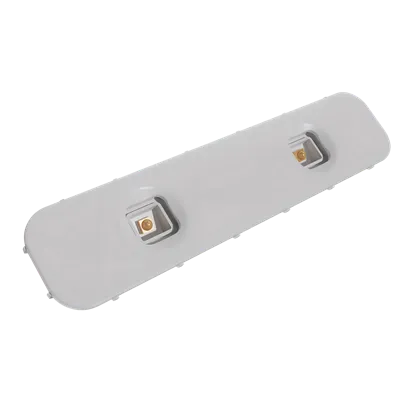
If you’re tired of rework, tired of sky-high energy bills, tired of parts that come out inconsistent, and you want a curing system that’s built for the modern workshop? Hit me up, let’s chat. We can send a rep to your shop, run a test on your actual parts, show you the numbers, no pressure. I’ve helped dozens of shops make the switch, and every single one has come back saying they wish they did it sooner. Curing doesn’t have to be a headache – it should be a part of your process that runs smoothly, saves you money, and gives you great parts every single time. Let’s make that happen for you.
Module References
- Industrial All-LED Curing: Efficiency and Process Advantages, Journal of Industrial Adhesives and Sealants, 2022
- Microwave vs. LED Curing for Photopolymeric Materials, International Journal of Manufacturing Technology, 2021
- Energy Consumption Comparison of Industrial Curing Systems, U.S. Department of Energy Industrial Technologies Office, 2023
- Heat Sensitivity in Curing Processes: Impacts on Substrate Integrity, Journal of Coatings Technology and Research, 2022
- Long-Term Performance of LED vs. Microwave Curing Units, Factory Maintenance & Operations Magazine, 2023
UVLEDTEK Group
As one of the most professional all-led curing manufacturers and suppliers in China, our products have good reputation in the market. Please rest assured to buy high quality all-led curing at competitive price from our factory. For more information, contact us now.
Address: Huangshi Industrial Zone, Putian City, Fujian Province, China
E-mail: info@uvledtek.com
WebSite: https://www.uvledtek.com/
