If you’ve ever ordered sprockets for a conveyor system, a mountain bike drivetrain, or a heavy farm tractor, you might not have thought much about what happens to those gears before they show up at your loading dock. As someone who’s been supplying industrial sprockets for over 18 years, I can tell you this: the heat treatment process is the quiet backbone of every reliable sprocket. It’s not just a random step—its a carefully calibrated sequence that turns a chunk of mild steel into a part that can withstand decades of friction, shock loads, and exposure to dirt and moisture, without cracking, wearing out, or failing mid-job. Let me walk you through exactly how we do it at our shop, why each step matters, and how it makes the sprockets you buy from us worth every penny. Sprocket
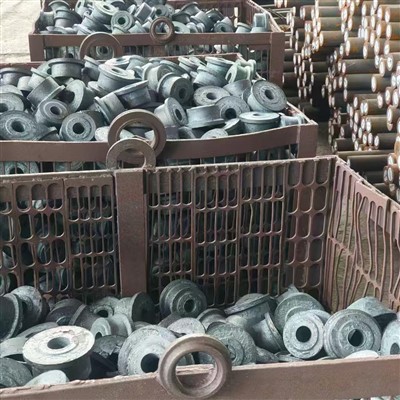
First, a quick reality check: not all sprockets are the same, and not all heat treatments work for every application. If you’re a farmer needing sprockets for a grain elevator that runs 18 hours a day in dust and humidity, you need a different heat treatment than someone making sprockets for a high-end mountain bike, which needs to be light and responsive. Even sprockets for a small conveyor in a food processing plant have different requirements—they have to be corrosion-resistant, too. Our team starts every order by asking three simple questions: what material is the customer’s base sprocket made of? What’s the load it will carry? And what environment will it run in? That answers tells us which heat treatment process we’ll use, whether it’s conventional quenching and tempering, surface hardening, or something a bit more specialized like carburizing for high-stress parts.
Let’s start with the basics: before any heat treatment happens, the raw sprocket is already cut, milled, and machined to the exact dimensions the customer ordered. Most of our standard industrial sprockets are made from 1045 carbon steel, a workhorse alloy that’s affordable, easy to machine, and responds really well to heat treatment. For higher-stress applications, like sprockets for construction equipment, we use 4140 alloy steel, which adds chromium and molybdenum for extra toughness. Once the machined sprockets leave our CNC lathes and mills, they go straight to the heat treatment bay—no shortcuts here, because any mistake at this stage can ruin a perfectly good part.
The first step in our standard heat treatment process is austenitization. That sounds like a fancy science term, but it’s actually pretty straightforward. We load the sprockets into a large, computer-controlled electric furnace, then heat them evenly to around 845 to 900 degrees Celsius (that’s 1550 to 1650 degrees Fahrenheit). Why that temperature? Because at that point, the steel’s crystal structure shifts from ferrite (the soft, grainy structure of mild steel) to austenite, which is able to dissolve carbon and harden when cooled quickly. We don’t just crank the heat up to max, by the way—we heat the sprockets slowly over two to three hours, depending on their size, to make sure every part of the sprocket gets to that temperature evenly. If we heat a 24-inch diameter sprocket too fast, the outer edges will reach the target temperature before the hub, and when we quench it later, it will warp or harden unevenly. Warping is the worst mistake a heat treater can make—if a sprocket’s teeth are even slightly off-round, it won’t mesh properly with your chain, leading to premature wear and failure.
Once all the sprockets are at a uniform austenitic temperature, it’s time for quenching. This is where the magic starts to happen, and it’s the most critical step for getting that hard, wear-resistant surface. Quenching is just rapid cooling, but how we do it depends on the sprocket’s size and the material. For small to medium 1045 steel sprockets, we use polymer quenchant— a water-based solution with a polymer additive that cools the steel at a controlled rate. If we used plain water, the outer layer of the sprocket would cool too fast and get brittle, while the inner core would cool too slow and stay soft. The polymer additives slow down the cooling just enough to get a uniform hardening through the tooth surface, but leave the core tough, so the sprocket can absorb shock loads without cracking. For larger sprockets, or ones made of harder alloy steel like 4140, we use oil quenching, which cools the steel a bit slower than water, reducing the risk of cracking in thicker parts. We never use spray quenching for standard sprockets, by the way—spray quenching is for custom, ultra-high-stress parts, and it’s overkill for most of our customers’ needs.
After quenching, the sprockets are super hard—too hard, actually. If you tried to use a sprocket right after quenching, it would be so brittle that a small shock, like a rock hitting it on a farm, would make it chip or crack. That’s why we temper next. Tempering is the process of heating the quenched sprockets to a lower temperature, usually between 150 and 650 degrees Celsius, depending on how tough we need them to be. For sprockets that need to resist heavy shock, we temper at a lower temperature (around 200 degrees Celsius) to keep most of that hardness, but add a little toughness. For sprockets that will run in low-load, high-wear environments, like a conveyor belt in a warehouse, we temper at a higher temperature (around 550 degrees Celsius), which makes the steel a bit softer, but way less likely to break under sudden stress. We temper for two to four hours, again depending on size, then let the sprockets cool slowly to room temperature. That slow cooling removes any residual stress left from quenching, so the sprocket won’t warp or crack after it’s installed.
But wait—what if your sprocket doesn’t need the whole part to be hard? What if you just need the teeth (the part that meshes with the chain) to be hard, but the hub to stay soft so it can bolt easily to a shaft? That’s where surface hardening comes in, and it’s one of the most common processes we use for high-volume industrial sprockets. Our go-to surface hardening method is induction hardening, and it’s super precise. Here’s how it works: after machining the sprocket, we mount it on a rotary table, then pass a high-frequency induction coil over each tooth. The coil generates an electromagnetic field that heats only the outer 2 to 5 millimeters of the tooth surface to austenitization temperature—we don’t heat the core or the hub at all. Then, immediately after heating, we spray the tooth with a fine mist of water to quench it, hardening only the outer layer. The core of the sprocket stays exactly as it was before machining—tough, easy to machine, and perfect for fitting onto a shaft. Induction hardening is great because it’s fast (we can process 100 small sprockets an hour) and super consistent. No two sprockets from the same batch will have a different surface hardness, which is a huge plus for customers who rely on their sprockets to run reliably 24/7.
For even higher-stress applications, like sprockets for mining equipment or heavy construction cranes, we use carburizing. Carburizing is a longer process, but it’s perfect for parts that need a very hard, wear-resistant surface and a tough core. We start by loading the sprockets into a carburizing furnace, then flood the furnace with a carbon-rich gas (usually methane or propane). The sprockets are heated to austenitization temperature, and the carbon from the gas diffuses into the outer layer of the steel, adding up to 1% more carbon to the surface. Once the sprocket has the right amount of surface carbon, we quench it, turning that high-carbon outer layer into an extremely hard, wear-resistant case, while the core stays low-carbon and tough. Carburized sprockets can take way more shock and wear than conventionally quenched ones, which is why we use them for customers operating in harsh, heavy-load environments.
After any heat treatment, we have to test every single sprocket to make sure it meets our standards. This isn’t a guesswork part of the process—we use tools like Rockwell hardness testers to check the surface hardness of each sprocket’s teeth (we target 55 to 60 HRC for most standard sprockets, which is hard enough to resist wear but not so hard that it’s brittle). We also use magnetic particle testing to check for any small cracks or defects that might have formed during heat treatment. If a sprocket fails any test, it’s scrapped—we have a zero-tolerance policy for bad parts. We’d rather throw a $100 sprocket than send a $10,000 order to a customer that will fail in six months.
I’ve seen too many suppliers cut corners on heat treatment to save a few bucks. I remember a client a few years ago who came to us with a stack of failed sprockets from a different supplier—they’d been installed on a farm’s combine, and after just one harvest, the teeth were worn down so much they wouldn’t mesh with the chain. When we cut one of the failed sprockets open, we could see that the heat treatment had been done wrong: the surface was only 30 HRC, so it wore away in weeks. That’s a bad deal for the customer, and it’s bad for our business too, because we know how important downtime is. A combine that’s down during harvest can cost a farmer thousands of dollars an hour. So we never cut corners—every sprocket that leaves our shop has been heat treated by our team of certified heat treaters, tested twice, and inspected before it gets boxed up.
Of course, heat treatment isn’t a one-size-fits-all process. If you have a custom sprocket for a unique application, we can adjust the process to meet your needs. If you need a sprocket that’s lightweight for a drone or a motorcycle, we can use a high-strength aluminum alloy and adjust the heat treatment to get the right balance of strength and weight. If you need sprockets for a food processing plant that need to resist corrosion, we can use stainless steel and a specialized heat treatment that adds hardness without sacrificing corrosion resistance.
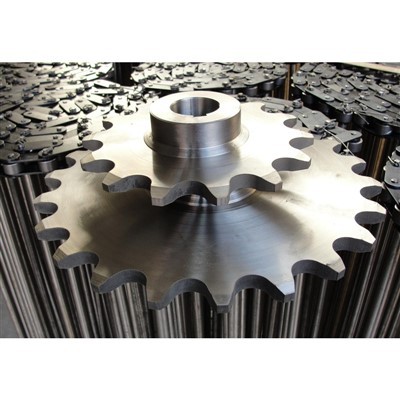
At the end of the day, the heat treatment process is what separates a cheap sprocket that lasts six months from a reliable one that lasts five or ten years. It’s not the most glamorous part of making a sprocket, but it’s the most important. Our team has spent years refining this process, working with customers to adjust it for their specific needs, and making sure every sprocket we send out meets the highest standards. If you’re looking for sprockets for your next project, whether it’s a small conveyor system or a fleet of heavy construction equipment, we’d be happy to talk through your needs, walk you through our heat treatment process, and help you find the right sprockets for your application. Reach out to us to discuss your requirements and get a custom quote.
Forged Chain References:
- "Heat Treatment of Carbon and Low-Alloy Steels", ASM International, 2019.
- "Induction Hardening of Sprockets: Process and Applications", Gear Technology Magazine, 2021.
- "Carburizing for Heavy-Duty Industrial Components", Industrial Heating Magazine, 2020.
- "Metallurgy for the Non-Metallurgist", 2nd Edition, ASM International, 2017.
Zhejiang Hangte Chain Transmission Co., Ltd.
We are one of the most experienced sprocket manufacturers and suppliers in China since 1999. Please rest assured to buy high quality sprocket made in China here from our factory. If you have any enquiry about cooperation, please feel free to email us.
Address: No. 195 Qinglin East Street, Qingshan Lake Subdistrict, Lin’an District, Hangzhou City, Zhejiang Province
E-mail: hangtechain@gmail.com
WebSite: https://www.chinahtchain.com/
