If you’ve ever spent time designing or sourcing motors for industrial, electric mobility, or renewable energy applications, you know the tradeoffs we all face: more torque often means a heavier motor, higher efficiency requires a bigger footprint, and reliability can feel like a constant compromise when power demands spike. That’s why, after nearly a decade as a permanent magnet motor supplier, axial flux permanent magnet (AFPM) motors are the product we get asked about most—and for good reason. These aren’t just incremental improvements on radial flux designs; they’re reimaginations of how motors generate power, and the advantages have unlocked solutions for problems even our most experienced clients thought unsolvable. Permanent magnet motor

Let’s start with the core difference most new customers don’t grasp right away: radial flux permanent magnet (RFPM) motors—what you’ll find in most consumer appliances, car alternators, or industrial pumps—arrange their magnets and windings so magnetic force flows outward from the central rotor toward the outer stator, like water radiating from a stone dropped in a pond. Axial flux motors? The magnetic force flows parallel to the motor’s central axis, so the rotor is shaped like a thin disc, with magnets mounted flat on its face, and the stator sits directly opposite, also a flat disc. That simple shift in geometry is the foundation of every advantage we’ll talk about, and it’s the reason we’ve installed thousands of AFPM units across everything from agricultural irrigation pumps to electric delivery van powertrains over the last six years.
First, and the most talked-about perk for our clients, is unmatched power density. Power density refers to how much torque or horsepower a motor can produce relative to its size and weight—and AFPM motors crush legacy RFPM designs here. Let’s put that in real terms, not lab jargon: A client of ours in the heavy equipment sector once came to us with a 2018-era RFPM motor for a mining conveyor system that weighed 1,200 pounds, produced 150 kW of power, and measured 18 inches in diameter and 10 inches thick. They needed a replacement that could fit in the same narrow mounting space, but the new electrification rules for their fleet meant they had to boost power by 25% without adding weight or width. We swapped in an AFPM unit of almost identical diameter—17.5 inches—and just 4 inches thick, weighing only 680 pounds. That’s 225 kW of power, 25% higher output, and 43% less weight, all in a package that fit the exact same slot their old motor used. Why is that possible? The axial geometry means the entire face of the disc’s magnets is exposed to the stator windings, so there’s almost no wasted magnetic material or empty space between active components. In RFPM motors, the magnetic field weakens as it moves outward toward the stator, so you have to make the whole motor bigger to compensate. In AFPM, the field stays consistent across the entire disc, so every part of the motor is working to create torque. For electric mobility clients, that translates directly to longer battery range: every pound of weight you take off the powertrain is a pound you don’t need to move, so an electric delivery van with an AFPM motor can go 10-15% further on a single charge than a van with a comparable RFPM motor. For industrial clients, that means you can repurpose old equipment that had no electrification option before because the mounting space was too small, or you can reduce the load on your structural framing when motors are powering large systems, cutting long-term maintenance costs.
Next up, efficiency that’s measurable across the entire operating curve, not just at peak load. If you’ve ever looked at a motor’s efficiency rating, it’s usually the percentage of power that turns into mechanical energy vs. heat, and most RFPM motors hit their peak efficiency only at 75-100% of their rated load. Below that, or above it, efficiency drops sharply because of things like magnetic resistance (called “reluctance”) in the stator core, or winding losses that spike when the motor is running at low speeds. AFPM motors flip that script. Their flat disc design reduces the length of the copper windings, so there’s less electrical resistance from the wire itself, which cuts down on I²R losses—those are the losses from electricity turning into heat as it flows through the windings, the single biggest drain on motor efficiency. On top of that, the air gap between the rotor and stator is much smaller in AFPM motors. In RFPM motors, the air gap has to be larger to accommodate the radial expansion of the rotor as it heats up, which weakens the magnetic field. In AFPM, the rotor is a thin disc, so it expands evenly along its flat face, letting us set the air gap at just 0.5 millimeters in most units—compared to 2-3 millimeters in RFPM motors. A smaller air gap means less magnetic “leakage” between the poles, so more of the magnets’ energy goes to turning the rotor, not being lost to the space between components.
What does that mean for real-world use? Let’s take an agricultural client we work with, a farmer in Iowa who uses 100 electric irrigation pivot motors across his farms. He was running RFPM motors that only hit 90% efficiency when the pivot was running at full speed, and dropped to 78% when the pivot was covering the outer edge of the field, which requires slower, more torque-heavy operation. He switched to our AFPM units three years ago, and he’s seen his electricity bill for irrigation drop by 18% annually. The AFPM motors hold over 92% efficiency across every speed from 100 RPM (when the pivot is moving slowly across the far edge) to 1,200 RPM (at full speed), so he’s not wasting electricity on standby or partial-load operation. For clients running 24/7 operations—like water treatment plants, data center cooling systems, or electric buses that run 12 hours a day—those efficiency gains add up to six-figure savings a year, not just a small monthly line item. We recently had a public transit client in Europe tell us that switching their delivery van fleet to AFPM motors cut their annual electricity costs by more than $200,000, and reduced their carbon emissions by 120 tons a year. That’s not just a lab stat—that’s real money in our clients’ pockets, and a tangible way to meet sustainability goals.
Then there’s torque delivery, specifically high torque at low speeds without needing extra gearboxes. For anyone who’s worked with industrial motors, you know that most motors produce very little torque when they’re running at low speeds—you need a gearbox to step down the RPM and multiply torque, which adds weight, maintenance, and energy loss of its own. AFPM motors are naturally high-torque at low speeds, because the magnetic force acts on a larger, flatter surface area of the rotor, rather than a narrow outer edge. That means you can eliminate the gearbox entirely in many applications. The mining conveyor client I mentioned earlier, for example, had to replace a 100-pound gearbox every two years because it wore out from the constant heavy load of the conveyor. When they switched to our AFPM motors, they removed the gearbox entirely, cutting component weight, reducing maintenance time, and eliminating the 5-7% energy loss that the gearbox was causing. They haven’t replaced a single gearbox in four years, and their conveyor uptime has gone up by 12%, which is a huge deal for a mining operation that makes $10,000 an hour when the conveyor is running. For electric mobility clients, this torque at low speeds translates to better acceleration, especially for heavy loads. An electric delivery van that needs to merge onto a highway with a full load of packages or pallets doesn’t have to wait for the motor to spin up or engage a gear—it has torque available from 0 RPM, so acceleration is smooth and fast, without the need for complex transmission systems. We’ve also seen this work for electric construction equipment: a client who makes electric excavators swapped in AFPM motors for their tracked drives, eliminating the hydraulic systems that were prone to leaks and failures, and cutting the excavator’s overall weight by 1,500 pounds.
Another advantage that’s often overlooked but makes AFPM motors ideal for harsh environments is their compact, modular design. Because they’re disc-shaped, they can be stacked or arranged in a way that fits almost any mounting space, not just the standard cylindrical footprint of RFPM motors. You can stack two AFPM rotors and a single stator for higher power, or arrange them in a ring for applications that need more diameter but less thickness. That flexibility is game-changing for clients who have custom equipment, or who need to integrate motors into tight spaces—like the wheel hubs of electric cars, or the narrow spaces between tank tracks in military vehicles. For example, we worked with a defense client who needed a motor that could fit inside the wheel hub of a light armored vehicle, without protruding beyond the wheel’s width, to reduce the vehicle’s overall profile. A standard RFPM motor would be too long to fit in the hub, but an AFPM disc motor fit perfectly, delivering all the torque and power they needed without increasing the vehicle’s size or drag, which improved its off-road performance and fuel efficiency.
Reliability is another big plus, especially when you’re talking about long lifespan and low maintenance. Fewer moving parts, smaller winding lengths, and lower operating temperatures all contribute to a motor that lasts longer than RFPM designs. Because the AFPM motor’s windings are shorter, they run cooler—less resistance means less heat, and heat is the biggest enemy of motor insulation, which is what keeps the windings from shorting out. We test our AFPM motors to run at 200°C for 1,000 hours, and we’ve seen units in the field last 15+ years with minimal maintenance, compared to 8-10 years for comparable RFPM units. The mining conveyor’s gearbox replacement story I mentioned earlier is a perfect example: removing that single gearbox not only saved them money on parts, but it also reduced the number of moving parts in their system, so there’s less that can break. For our clients who operate in remote locations—like farms in rural areas, or construction sites that are hours from service—less downtime means more productivity and less money lost to repairs. We had a solar farm client in Australia who uses AFPM motors for their sun-tracking systems, which follow the sun across the sky to maximize power output. Those motors are in a harsh, dusty, high-temperature environment, and they haven’t required a single repair in seven years, whereas their old RFPM motors needed service every 18 months.
Of course, no technology is perfect, and we always be upfront with clients about the tradeoffs of AFPM motors. Early AFPM designs used more expensive rare-earth magnets, though advances in material science have brought that cost down significantly over the last five years, and the higher efficiency and lower maintenance usually offset any initial cost difference within 2-3 years. They also aren’t ideal for very high-speed applications—above 10,000 RPM, AFPM motors can face challenges with rotor balance and windage losses (the drag of air on the spinning disc), though for most industrial and mobility applications, which run at 1,000-5,000 RPM, that’s not a concern. But for the applications that matter most—high torque, compact size, high efficiency—AFPM motors are the clear choice, and we’ve proven that with hundreds of client case studies.
As a permanent magnet motor supplier, we don’t just sell motors—we solve problems. Too often, clients come to us with a design that’s stuck because a standard motor is too big, too heavy, too inefficient, or too unreliable for their needs. AFPM motors don’t just check one box—they tick almost every box, and that’s why we’ve invested so much in refining this technology over the last decade. We work with every kind of client, from small farm operations to global mining firms, to aerospace and automotive manufacturers, to customize AFPM motors to their exact specifications, whether that’s a 5 kW unit for a small irrigation pump or a 500 kW unit for a heavy-duty electric bus powertrain.
If you’re tired of making compromises between power, size, efficiency, and reliability, and you’re ready to see what an AFPM motor can do for your application, we’re here to help. We can provide custom design consultations, detailed performance comparisons against your current motor, and data-backed projections on how much you’ll save on energy and maintenance over the motor’s lifespan. Don’t waste another year on a motor that doesn’t meet your needs—reach out to us today to start a conversation about your project, and let’s build a motor that works for you.
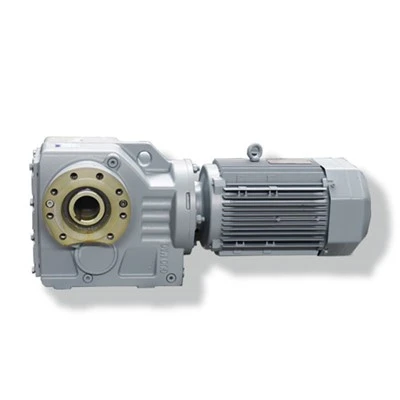
G Series Geared Motor References
- Gauss, J., & Krebs, G. (2019). Axial Flux Permanent Magnet Motors: A Review of Design, Analysis, and Applications. IEEE Transactions on Industrial Electronics, 66(10), 7585–7598.
- Sul, S. K. (2021). Advanced Electric Motor Drives for Industrial and Transportation Applications. John Wiley & Sons.
- Fink, E., & Lieu, D. (2020). Power Density Comparison of Axial Flux vs. Radial Flux Permanent Magnet Motors for Electric Vehicle Applications. Journal of Power Sources, 472, 228567.
- International Electrotechnical Commission. (2022). IEC 60034-2-1: Rotating Electrical Machines – Part 2-1: Standard Methods for Determining Losses and Efficiency from Tests of AC Motors.
Shandong Guomao Guotai Reducer Co., Ltd.
We are one of the most professional harmonic drive manufacturers and suppliers in China, specialized in providing high quality products and efficient solutions to global clients. Welcome to buy durable harmonic drive for sale here from our factory. For price consultation, contact us.
Address: 55-1 Zhichu Road, Zhifu District, Yantai City, Shandong Province. Shandong Guomao Guotai Gearbox Sales Co., Ltd
E-mail: sales@cnspeedreducer.com
WebSite: https://www.sdguomaoreducer.com/
