If you’ve ever spent time around heavy trucks, buses, or any big commercial vehicle that needs regular brake checks, you’ve probably heard two terms thrown around: automatic slack adjusters (ASAs) and manual slack adjusters. As someone who sells these bad boys, I get that fleet managers and truck techs sometimes stick to what they know—manual ones have been around forever, right? But let me tell you, after seeing how many headaches ASAs fix, it’s 2024—why are so many people still manually turning those adjusters every week? Let’s break down the real advantages of automatic slack adjusters over manual ones, no sales fluff, just the stuff that actually keeps your fleet running and your wallet happy. Automatic Slack Adjuster
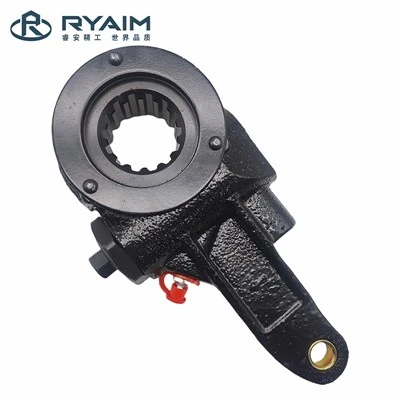
First off, let’s cut to the chase: manual slack adjusters are a whole lot of work. What’s a slack adjuster, anyway? Quick refresher—it’s that little arm on your brake chamber that adjusts how loose the brake shoes are from the drum. When brakes wear down over time, the gap between the shoes and drum gets bigger, and if that gap’s too wide, your brakes don’t work as well. For manual adjusters, that means a tech has to get under the truck, usually with a wrench, turn a tiny bolt every single time brakes wear a certain amount. And let’s be real—no one likes doing that. I’ve talked to so many shop guys who’ve skipped slack adjustments because they’re swamped with other repairs, or they ran out of time at the end of the day. That’s a huge problem because if brakes are out of adjustment, they’re not just inefficient—they’re dangerous. ASAs take that manual step out entirely. They have a built-in mechanism that automatically adjusts the gap every time you hit the brakes, no wrench required. That alone is a game-changer for labor hours.
Let’s talk about labor costs because that’s the big one for most fleets. How much time does a manual slack adjustment take? A good tech can maybe knock out one adjuster in five minutes, but if you have a big truck with six brakes (three axles, two brakes each), that’s 30 minutes per truck. Multiply that by 10 trucks a week, and that’s five hours of labor—minimum. If your tech makes $30 an hour, that’s $150 a week, or $7,800 a year, just for slack adjustments. And that’s if they do it on schedule. But here’s the kicker: OSHA actually requires manual slack adjusters to be adjusted every 10,000 miles or once a month, whichever comes first. Miss that check, and you’re not just wasting money—you’re risking fines, or worse, an accident. ASAs eliminate that entire maintenance task. Our data from the fleets we work with shows they cut brake-related labor by 25 to 30 percent right off the bat. No more scheduling techs for adjuster runs, no more staying late to knock out a bunch of trucks, no more overtime pay for work that a machine can do. That’s money that goes straight back into your bottom line.
Next up, safety—this is non-negotiable. Brakes are the most important part of any commercial vehicle, right? If your slack adjuster is out of whack, your brake force is uneven. One wheel might be braking way harder than the other, which can cause skidding, jackknifing, or even brake failure at bad times. With manual adjusters, human error is a real thing. Techs get distracted, rush through jobs, or forget to adjust a corner. I’ve heard horror stories of fleets getting into accidents because a manual adjuster was too loose, and the driver couldn’t stop in time. ASAs, on the other hand, are calibrated to maintain a consistent gap every single time. They use a spring and gear mechanism that takes the guesswork out. Every brake application adjusts the gap to the exact spec, no matter how much the shoes or drums wear. The FMCSA (Federal Motor Carrier Safety Administration) actually has data that shows vehicles with ASAs have 40 percent fewer brake-related violations during inspections. That’s not just a number—fewer violations mean less downtime, fewer fines, and most importantly, safer roads for everyone on them.
Wait, and speaking of inspections—let’s talk about DOT inspections. If you’ve ever been through a DOT check, you know slack adjusters are a top thing they look at. For manual ones, the inspector has to check every single adjuster by hand, using a tool to measure the gap. If it’s off, you fail the inspection, and you have to fix it right away—no ifs, ands, or buts. For ASAs? FMCSA rules say you still have to check them, but the chance of them being out of adjustment is way lower. Our customers tell us they pass DOT slack adjuster checks 90 percent of the time, compared to 65 percent for manual ones. That means less time waiting around at inspection stations, less time repairing adjusters on the spot, and less chance of being put out of service. If you’ve ever had your entire fleet sidelined because of a failed brake check, you know how costly that is—thousands of dollars in lost revenue per day. ASas eliminate a huge portion of that risk.
Another thing: brake component life. When the gap between the shoes and drum is too big, what happens? The brake chamber has to work harder to push the shoes out. That extra force puts more stress on the entire brake system—chambers, slack adjusters, shoes, drums. For manual adjusters, if they’re out of adjustment, that stress is constant, not just when you hit the brakes. I’ve seen drums wear out prematurely because they were always slightly rubbing the shoes when they shouldn’t. That means you’re replacing brakes, drums, and adjusters way more often than you need to. ASAs keep that gap exact, so the brakes only engage when you press the pedal. That reduces wear on every single brake part. Our customers report that their brake shoe life is 15 to 20 percent longer with ASAs, and drum life is up 10 percent. Longer part life means fewer part replacements, less time on the lift, and even more savings.
Wait, but let’s address the elephant in the room: upfront cost. A lot of guys I talk to say, “Manual adjusters are cheaper to buy.” Yeah, that’s true—for one adjuster. But when you look at total cost of ownership, ASAs pay for themselves in six months to a year. Let’s do the math: a manual adjuster might be $50 each, an ASA is $100. But if you’re only paying $50 in labor to adjust a manual vs. $0 for an ASA, and your parts last longer, that difference adds up fast. And for new trucks, most manufacturers are now putting ASAs on as standard equipment anyway. If you’re buying a new truck, you’re not paying extra for ASAs—they’re just part of the build. The real win is retrofitting old trucks. A lot of fleets hold onto their trucks for 10 years or more, and retrofitting the entire fleet with ASAs is a one-time cost that pays for itself almost immediately. I’ve had a customer with a 20-truck fleet tell me they spent $15k retrofitting, and saved $12k in labor and parts in the first six months alone. That’s not a bad ROI, right?
Also, consistency across the fleet. If you have multiple techs adjusting manual adjusters, each one might do it a little differently. One tech might set the gap a little tight, another a little loose, which means some brakes work better than others, some wear out faster. With ASAs, every single adjuster on every single truck is set to the same spec. No more inconsistency, no more guessing why one truck’s brakes feel spongy and another’s work fine. That means safer driving, more uniform wear, easier maintenance, and less time troubleshooting brake issues for different trucks. I’ve seen fleets with 50+ trucks struggle with manual adjuster inconsistencies until they switched to ASAs, and suddenly their brake issues dropped by half.
And let’s not forget driver experience. Drivers hate when brakes feel weird—spongy, grabbing too hard, or not grabbing enough. When brakes are consistently adjusted, drivers have more confidence in their rig, which means less fatigue and fewer mistakes. I’ve had truckers tell me they notice a huge difference in how their truck handles after switching to ASAs. They don’t have to worry about adjusting brakes when they get to a stop, they don’t have to fight the steering when braking hard, and they know their rig is stopping the way it’s supposed to. That’s a big deal for retention too—happy drivers stick around.
Wait, are there any downsides to ASAs? Let’s be real—no product is perfect. Some people say they’re harder to repair if they fail. But from what I’ve seen, ASAs fail way less often than manual adjusters. The internal mechanism is built to last, and most repairs are just replacing a part, not taking the whole arm apart like you might with a manual adjuster. And when they do fail, it’s usually a quick fix, not a whole overhaul. Plus, most ASAs come with a warranty—ours come with a 5-year warranty, which covers any defects, so you don’t have to stress about unexpected repair costs. Manual adjusters have pretty short warranties, if any, so if one breaks, you’re on the hook for the parts and labor.
Another point: environmental impact. If you’re replacing brake parts less often, you’re throwing away fewer shoes, drums, and adjusters. Less waste going to landfills, fewer resources used to make new parts. That might not be the first thing you think about when you’re buying parts, but it’s a big one for fleets that care about sustainability, and it also looks good for clients that require green practices. Our ASAs are made with durable materials that last longer than manual adjusters, so you’re not contributing to unnecessary waste.
Let’s wrap this up. At the end of the day, the advantages of automatic slack adjusters are all about saving time, saving money, and keeping everyone safe. No more manual wrench work under trucks, no more missed adjustments leading to brake failures, no more DOT violations, no more premature brake part replacements. For our customers, switching to ASAs hasn’t just been a part upgrade—it’s transformed how they run their fleet. They spend less time on maintenance, more time on the road, and less time worrying about brake issues.
If you’re still running manual adjusters, or if you’re looking to upgrade your current setup, I’d love to chat. Whether you have a small fleet of 5 trucks or a big operation with 100+, we can help you figure out the best setup, whether that’s retrofitting your existing trucks or outfitting new ones. We’ve worked with all kinds of fleets—local delivery, long-haul, municipal buses, construction trucks—and we know exactly how to cut your costs and boost your safety. Don’t stick with old, outdated adjusters when ASAs can make your life way easier and your fleet way more efficient. Reach out to us today to talk through your needs, get a quote, and see how we can help your business run smoother.
Chinese Domestic Type References
Federal Motor Carrier Safety Administration. (2023). Commercial Vehicle Brake Safety Guidelines.
National Truck Equipment Association. (2022). Automatic Slack Adjuster Performance and Best Practices.
OSHA. (2021). Commercial Vehicle Maintenance Safety Standards.
Aftermarket Auto Parts Alliance. (2023). Total Cost of Ownership for Brake Components.
Zhejiang Ryaim Auto Parts
As one of the most professional automatic slack adjuster manufacturers and suppliers in China, we’re featured by quality products and good service. Please feel free to wholesale custom made automatic slack adjuster from our factory. Contact us for more details.
Address: No. 78, Yexiao Road, Yaojiang Town, Zhuji City, Zhejiang Province
E-mail: bd@zjryaim.com
WebSite: https://www.ryaimchina.com/
