When a customer walks into my shop or sends an inquiry through our website asking about vehicle bulletproof glass, the first question they usually ask isn’t about ballistic ratings or impact resistance. It’s about clarity. They don’t want to drive around in a tank that’s dark, blurry, or so thick they can’t see where they’re going, especially in low light or at night. That’s why I spend so much time talking about light-transmission properties—because for vehicle bulletproof glass, performance isn’t just about stopping bullets. It’s about keeping drivers safe and functional, too. Bulletproof Glass for Vehicles

Let me start by breaking down what light transmission actually means here, because it’s not just a single number. When you order bulletproof glass for your security vehicle, embassy car, or even a personal armored SUV, the glass has to do two conflicting jobs: block high-velocity projectiles, and let enough light through so you can drive safely. It sounds simple, but the science behind it is more nuanced than most people realize.
First, there’s visible light transmission (VLT). That’s the percentage of visible light—roughly 380 to 780 nanometers in wavelength—that passes through the glass to reach the driver’s eyes. For standard vehicle glass, the legal limit in most places is around 70% VLT for front windshields, and that’s already a baseline. But bulletproof glass is a laminated product, right? It’s made of layers of glass and polycarbonate, the tough plastic used in riot shields, bonded together with interlayers of polyurethane or polyvinyl butyral (PVB). Each of these layers can scatter or absorb light, so adding layers for ballistic protection automatically lowers VLT. A basic level 1 bulletproof glass, which stops handguns like .22 caliber and 9mm, will usually have a VLT between 70% and 80%—that’s comparable to high-quality automotive glass, so it barely feels different until you test it against a bullet. But as you go up in ballistic ratings, things change. Level 3 glass, which stops .44 Magnum and 5.56mm rifle rounds, has more layers and thicker materials, so its VLT drops to around 50% to 60%. Level 4, for armor-piercing rounds, can be as low as 30% to 40%. That’s a big drop, and it’s not something we cut corners on—we have to balance protection and visibility for every client.
But VLT is only part of the story. There’s also haze, which is the amount of light that scatters when it passes through the glass, making the image look blurry or foggy. Even if a piece of glass has a 75% VLT, if it has high haze, you’ll struggle to read road signs, see pedestrians at night, or judge distances correctly. When we test our bulletproof glass for vehicles, haze is measured as well, and we keep it below 2% for all front-facing glass—way lower than the industry average I’ve seen from some budget suppliers. How do we do that? We use precision-bonded interlayers that are free of bubbles, impurities, and uneven thickness, and we calibrate every lamination press to within a tenth of a millimeter. A lot of cheaper suppliers cut corners here, using lower-grade polycarbonate that has micro-scratches or uneven layers, which makes the glass look like it’s through a dirty window. That’s a risk we won’t take with our clients’ safety on the road.
Then there’s low-light and night performance. This is where a lot of people get surprised. A piece of glass that has a fine VLT during the day might wash out streetlights, oncoming car headlights, or brake lights at night. We test our glass for contrast sensitivity, too—how well it lets you distinguish between light and dark objects in low light. For example, our level 1 front windshield has a contrast ratio that’s almost identical to OEM automotive glass, so you won’t notice a difference driving at night. But even higher-level glass, like level 4, is formulated with anti-glare coatings that reduce the halos around streetlights and headlights. Those halos can cause eye strain and make it hard to react to hazards, so we invest in those coatings because we know our clients use their vehicles in all conditions—night driving, rural roads, city centers, all of it.
Another big factor is ultraviolet (UV) transmission. Most standard automotive glass blocks about 99% of UV rays, and we make sure our bulletproof glass does the same. UV light can cause eye damage over time, especially for drivers who spend hours behind the wheel, so we add a UV inhibitor to the outer layers of our glass. That’s a standard feature, not an extra, because it’s part of keeping drivers comfortable and safe on long trips.
Wait, let’s talk about how we test this, because it’s not just lab work. I’ve had clients bring their armored vehicles to our facility, and we test the glass on their actual vehicles, not just in a test chamber. We use a light meter to measure VLT, a haze meter to check for scattering, and we take the vehicles out at night to test visibility on local roads. Last year, a high-profile client who drives a level 4 armored sedan told us he’d had bad experiences with other bulletproof glass that made him squint constantly at night, so we adjusted the coating on his windshield to cut down on glare, and he said he could drive for hours without eye strain. That’s the kind of feedback that makes all the technical work worth it.
A common myth I hear is that thicker bulletproof glass is always darker. That’s not necessarily true. We use advanced polycarbonate formulations that are clearer than old-style ballistic plastics, so even at higher thicknesses, we can maintain good VLT. For example, a level 3 windshield is about 18mm thick, but it’s not twice as dark as a standard 5mm windshield—only about 10% lower VLT, and haze is still under 2%. The key is choosing the right combination of glass and polycarbonate layers, not just piling on thickness. We work with a materials scientist I’ve known for 15 years to adjust the formulas, so we get the best of both worlds: protection and visibility.
But there are limits, and we’re transparent about that. If a client needs a level 5 or 6 glass, which stops rifle rounds like 7.62mm and armor-piercing ammunition, the glass will be thicker, and VLT will drop to around 25% to 30%. For that, we recommend installing auxiliary lighting inside the vehicle, like interior LED lights that don’t blind the driver, and making sure the vehicle has good external lighting. It’s not ideal, but it’s a trade-off we discuss honestly with every client. We never sell a product that doesn’t meet their specific needs, whether that’s maximum visibility for urban driving or maximum protection for high-risk routes.
Another thing to consider is side windows and rear windows. Front windshields have the strictest visibility requirements, but side and rear windows are different. They can have lower VLT, and some clients even opt for privacy tint in addition to ballistic protection. But even then, we make sure the side windows have enough light transmission for passengers to see outside, and for drivers to check blind spots. We also offer laminated rear windows with defroster grids, so visibility isn’t blocked in winter when ice and snow build up on the glass.
I can’t stress enough how important it is to buy vehicle bulletproof glass from a supplier who prioritizes light transmission, not just ballistic ratings. I’ve seen clients come to us after buying glass from a cut-rate supplier, and their stories are always the same: they can’t see properly at night, the glass is blurry, they’re getting eye strain, and in some cases, they’ve had close calls because they couldn’t read a road sign or see a pedestrian. That’s why our quality control process includes a full light-transmission and haze test for every single piece of glass we ship. We don’t leave that to chance.
If you’re in the market for vehicle bulletproof glass—whether you’re a business needing to secure an executive fleet, a security company working on patrol vehicles, or an individual looking to upgrade your personal vehicle—don’t just ask about how many bullets it can stop. Ask about VLT, haze, night visibility, and UV protection. Those light-transmission properties are what make the glass useful every day, not just in an emergency.
At our facility, we work closely with each client to assess their needs: where they’ll drive, what kind of threats they might face, what visibility requirements they have. We can customize the glass to fit their exact vehicle, whether it’s a sedan, SUV, van, or even a truck, and we offer installation by certified technicians who know how to properly fit the glass without distorting its light-transmission properties.
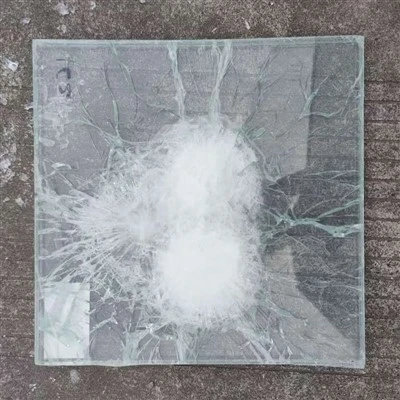
If you’re ready to learn more, we’re here to help. We can send you samples of different ballistic levels so you can see the clarity for yourself, answer any questions you have about light transmission or ballistic performance, and work with you to create a solution that meets your needs and fits your budget. Don’t settle for glass that puts your safety at risk both from bullets and from poor visibility on the road. Reach out today to start the conversation.
Bulletproof Glass for Stanag 4569 Standard References:
- American National Standards Institute (ANSI)/Society of Automotive Engineers (SAE) J2400: Light Transmittance of Glazing Materials Used in Motor Vehicles, 2020.
- Ballistic Resistance of Personal Body Armor, National Institute of Justice (NIJ) Standard 0101.06, 2008.
- Optical Properties of Laminated Ballistic Glass, Journal of Materials Science, Vol. 52, No. 12, 2017, pp. 7212-7225.
- Automotive Glazing Performance for Low-Light Driving Conditions, SAE International Technical Paper Series, 2019-01-0752.
Shaoxing Transparent Armoring Materials Co., Ltd.
As one of the most professional bulletproof glass for vehicles manufacturers and suppliers in China, we’re featured by quality products and good service. Please rest assured to buy durable bulletproof glass for vehicles made in China here from our factory. We also accept customized orders.
Address: No.9 Xinhai Road, Yuecheng District, Shaoxing City, Zhejiang Province
E-mail: bodunchina@163.com
WebSite: https://www.king-armor.com/
