If you’ve ever driven a car, operated industrial machinery, or even used a simple household appliance with moving parts, you’ve relied on rubber. As someone who’s spent 12 years in the rubber parts supply business—first as a production line supervisor, now as the lead for product testing and customer technical support—I’ve lost count of how many times clients ask, “Why do some rubber parts hold up for years, while others crack or fail in months?” The answer boils down to one core property that separates high-quality custom rubber components from the rest: fatigue resistance. Rubber Parts
Fatigue in rubber isn’t the same as the metal fatigue you might be familiar with, where repeated stress causes small cracks that grow until the part breaks. Rubber’s fatigue failure happens when cyclic loading—think a rubber seal compressing every time a machine runs, or a car’s suspension bushing twisting thousands of times a mile—damages the polymer chains that make rubber flexible in the first place. Over time, those tiny molecular breaks add up to visible cracks, then structural failure. For us as a rubber parts supplier, understanding and engineering fatigue resistance isn’t just a technical detail; it’s what keeps our clients’ operations running smoothly, their maintenance costs low, and their trust in our products strong.
First, let’s break down what makes rubber resistant to fatigue, because it’s not just one thing. It starts with the base polymer. Not all rubber is created equal, and choosing the right polymer for the application is non-negotiable. For example, natural rubber (NR) is a star when it comes to fatigue resistance because of its high molecular weight and the ability to form strong cross-links between chains during vulcanization. I remember a client in the logging industry a few years back who was using neoprene rubber for their log grapple bushings, and they were replacing them every three months due to constant twist and impact. We switched them to natural rubber compounds formulated with a small amount of anti-oxidant and fatigue-resistant additives, and those bushings lasted two and a half years. That kind of win sticks with you, because it’s not just a part—it’s solving a real problem for a partner.
Then there’s styrene-butadiene rubber (SBR), which is commonly used for tire components and conveyor belt rollers. SBR’s fatigue resistance is good, but it’s more sensitive to extreme temperatures and ozone than natural rubber. That’s why for outdoor applications, like rubber seals on construction equipment, we often pair SBR with a small percentage of ethylene propylene diene monomer (EPDM) to boost its resistance to weather-related fatigue. EPDM itself is another workhorse here—it has a saturated polymer backbone, which means it doesn’t break down as easily from oxygen or heat, so it can handle thousands of flex cycles without cracking. I once tested an EPDM rubber hose for a food processing plant that’s been in operation for seven years, and the only reason we even checked it was because the plant manager wanted to upgrade to a more efficient system. The hose still had zero visible cracks and was holding pressure within 1% of its original rating. That’s the kind of performance we aim for.
But polymer choice is only half the battle. The way we process rubber parts during manufacturing has a huge impact on fatigue resistance. One of the biggest mistakes we see other suppliers make is rushing the curing (vulcanization) process. If rubber isn’t cured long enough or at the right temperature, the cross-links between polymer chains are weak and uneven. That means when the part is put under stress, those weak links break easily, leading to early fatigue failure. On our production floor, we use a moving die rheometer to test every batch’s cure time, and we don’t sign off on a part until we’ve verified that its cross-link density is within our specified range. We also pay close attention to filler materials. Adding carbon black or silica to rubber isn’t just about making it black or changing its hardness—those fillers act as “reinforcements” that stop cracks from spreading. Too little filler, and the part is too soft and prone to flex fatigue; too much, and the rubber becomes brittle, which is just as bad. Balancing that mix is a fine art, and it’s one of the reasons our clients come back to us instead of lower-cost suppliers.
Another key factor in fatigue resistance is how we design the part itself. Even if you use the best polymer and perfect processing, a poorly designed rubber part will fail. Sharp corners, thin sections, or areas where stress concentrates are fatigue failure waiting to happen. For example, a rubber grommet that has a 90-degree bend at the edge will have much higher stress at that corner than a smoothly radiused edge. Early in my career, I worked on a project for a motorcycle manufacturer where their original grommets had sharp corners and were cracking after 10,000 miles. We redesigned the grommet with a 3mm radius at all corners, and using a natural rubber compound, we tested it to 100,000 flex cycles without a single crack. The manufacturer now uses that grommet across all their models, and they haven’t had a field failure in five years. We also consider environmental factors from the start. If a rubber part will be exposed to oil, ozone, or extreme temperatures, we adjust the formulation and design accordingly. For parts operating in cold climates, we use polymers with low glass transition temperatures so they stay flexible even in freezing weather, which prevents them from cracking when flexed. For parts in hot, humid environments, we add specialized stabilizers to resist heat aging, which is a major cause of fatigue in rubber.
Testing is where we prove all this. As a supplier, we don’t just take our word for it that our rubber parts have good fatigue resistance. We have an in-house fatigue testing lab where we run dynamic flex tests, compression set tests, and environmental aging tests on every custom formulation we develop. The dynamic flex test, for example, involves repeatedly bending a rubber specimen at a fixed angle and measuring how many cycles it takes to develop a crack of a certain size. We also test for “crack growth rate,” which tells us how quickly a small flaw will turn into a big problem. I’ve spent many late nights in that lab, watching test specimens cycle thousands of times, because I know that when a client puts a part into operation, there’s no room for surprises. Last year, we developed a custom rubber vibration isolator for a wind turbine manufacturer, where the parts have to withstand millions of flex cycles in harsh offshore conditions. We tested those isolators to 50 million cycles under simulated saltwater and wind, and they passed with no sign of fatigue. That part is now installed on turbines across the North Sea, and the manufacturer has told us they’ve had zero failures in the first 18 months of operation.
Of course, fatigue resistance isn’t the only property that matters in rubber parts. A part also needs to be durable, chemical-resistant, and fit for its intended purpose, but fatigue is the one that determines long-term reliability. I’ve had clients come to us after switching to cheaper rubber parts that failed prematurely, costing them thousands in downtime and replacement costs. One factory client had a conveyor belt system that was down for three days because of a failed rubber roller, and the replacement parts they’d bought from a non-specialized supplier only lasted a week. We worked with them to re-formulate the roller with a combination of natural rubber and EPDM, using a high carbon black filler to boost fatigue resistance, and those rollers have now been running for four years with no issues. For businesses, downtime is money lost, and that’s why investing in rubber parts with strong fatigue resistance is a smart long-term decision.
As someone who’s been in this industry for over a decade, I’ve seen how rubber parts have evolved, and how much more is expected from them now. From electric vehicles that demand lightweight, high-fatigue-resistance rubber components for batteries and motors, to medical devices where rubber seals need to be sterile and flex billions of times, the bar keeps getting higher. For our team, that means we’re constantly refining our formulations, testing new additives, and listening to our clients’ specific needs. We don’t sell “off-the-shelf” rubber parts—we work with each client to understand their application, the stresses their parts will face, and their performance goals, then engineer a rubber component that delivers the fatigue resistance they need.
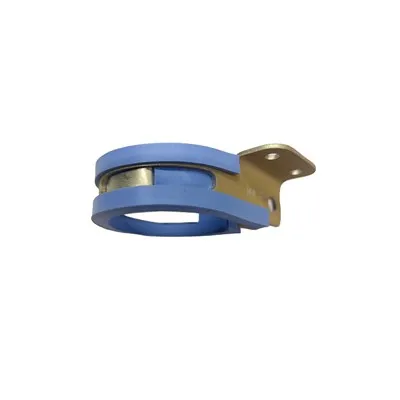
At the end of the day, what matters most is that our clients can rely on our rubber parts, no matter how tough the conditions. Whether it’s a small seal in a medical pump, a bushing in heavy construction equipment, or a hose in a wind turbine, fatigue resistance is the foundation of that reliability. If you’re looking for rubber parts that will stand up to the repeated stress of your application, with the durability to keep your operations running, we’d be glad to help you engineer the right solution. Contact us to discuss your project and learn how our custom rubber components can meet your fatigue resistance requirements.
Rubber Parts References:
- ASTM D4482-21, Standard Test Method for Rubber Property—Crack Growth Fatigue in Flexing Conditions.
- Mark, J. E., Erman, B., & Roland, C. M. (2019). Science and Technology of Rubber (4th ed.). Academic Press.
- Gent, A. N. (2012). Engineering with Rubber: How to Design Rubber Components (3rd ed.). Hanser Publications.
- ISO 132:2017, Rubber, vulcanized or thermoplastic—Determination of flex cracking and crack growth.
- Chapman, R. N. (2007). Fatigue of Rubber: A Review of Key Factors and Testing Methods. Rubber Chemistry and Technology, 80(3), 458–479.
Jiangxi Zhiyi Machinery Manufacturing Co., Ltd.
As one of the most professional rubber parts manufacturers and suppliers in China, we also support customized service. Please rest assured to wholesale bulk rubber parts in stock here from our factory. If you have any enquiry about quotation, please feel free to email us.
Address: Jiahai Industrial Park, No. 2799 Tianxiang Avenue, High-tech Zone, Nanchang City, Jiangxi Province.
E-mail: zgjxzy@163.com
WebSite: https://www.chinazhiyi.com/
