If you’ve ever held a milk jug, a laundry detergent bottle, or a reusable water container, you’ve held a HDPE bottle. As a supplier that’s worked with this material for over a decade, one question still comes up at trade shows, in follow-up emails, and even from repeat clients refining their packaging: Do HDPE bottles have a smooth surface? HDPE Bottles
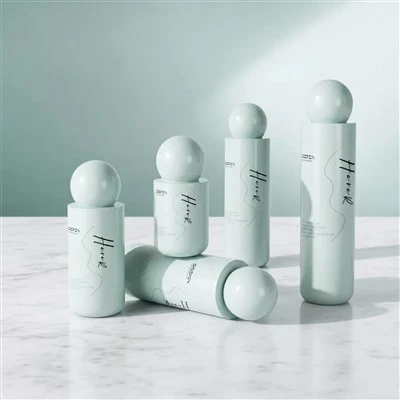
It sounds like a simple question, but the answer isn’t just a yes or no. The surface of a HDPE bottle is shaped by a mix of material properties, the production process, and small choices we make as manufacturers that end up making a big difference for how the bottle feels, functions, and even what it can hold. Let’s break this down, from the molecular level of HDPE to the finished bottle in your hand, and what that means if you’re sourcing packaging for your brand.
First, let’s start with what HDPE is, because its surface starts with its molecules. High-Density Polyethylene is a thermoplastic made from ethylene monomers, bonded into long, straight chains. The “high density” part comes from how little branching there is in those chains—unlike LDPE, which has lots of side chains that make it softer and more flexible. When you melt HDPE to form a bottle, those straight chains pack together tightly, which gives it its strength. But even tight packing doesn’t make the molecular surface perfectly smooth. At the nanoscale, HDPE’s surface is a little uneven, with tiny gaps and irregularities between those chains. For most everyday uses, that’s invisible—you don’t feel it when you hold a bottle of juice. But it matters for things like how labels stick, or how the bottle reacts to certain chemicals, which is why many clients ask about it in the first place.
Now, the production process is where that nanoscale unevenness turns into the surface we touch every day. Most HDPE bottles are made via blow molding, specifically extrusion blow molding, which is the method we use most in our facility. Here’s how that works: first, we melt HDPE resin into a tube called a parison. Then we drop that parison into a mold cavity, blow compressed air into it, and push the molten plastic against the cold walls of the mold. That’s when the surface gets its final shape.
If the mold is polished to a high gloss, and the HDPE resin is clean and free of contaminants, the finished bottle’s surface will feel smooth—like the opaque milk jug you grab from your fridge. But there are small factors that can make it less smooth, and most of them aren’t mistakes—they’re choices tied to performance. For example, if we add color pigments to the resin during production, tiny pigment particles can create micro-roughness on the surface. For products that need a matte finish, that’s exactly what we want. Matte HDPE bottles, which are popular for skincare or small household cleaners, don’t feel smooth in the way a glossy plastic does—they have a subtle, non-reflective texture that doesn’t show smudges. We work with brands that specify matte finishes because their consumers prefer that hand-feel, so we adjust our process accordingly, often using less-polished molds or adding surface modifiers to get that exact texture.
Another big factor in surface smoothness is mold conditions. If the mold isn’t cleaned properly between runs, leftover HDPE residue, dust, or even small amounts of moisture can create tiny bumps or streaks on the bottle’s surface. Early in our time as a supplier, we learned this the hard way. A new client came to us frustrated because their first order of HDPE cleaning bottles had a rough, streaky surface that made labels bubble and fall off. When we checked our mold cleaning logs, we realized a small amount of leftover resin from a previous run had baked onto the mold walls, creating those tiny imperfections. We fixed our cleaning process overnight, ran a test batch, and delivered replacement bottles that were smooth, and that client has been with us for seven years now. That lesson stuck: surface quality is as much about consistency in production as it is about the material itself.
There’s also the difference between the inner and outer surface of a HDPE bottle, which is a detail many people don’t think about. When we blow the parison into the mold, the outer surface of the bottle is pressed directly against the mold walls, so it takes on the mold’s finish. The inner surface, though, only touches the air inside the bottle, and the molten HDPE’s natural properties. Most of the time, the inner surface is smoother than the outer surface, because there’s no mold texture to create micro-roughness. But for products that are sensitive to the inner surface—like some pharmaceuticals or food with strong odors—we can use additives that make the inner surface even smoother, to reduce the chance of residues sticking. We’ve worked with a few clients that make artisanal olive oils, for example, that need their bottle’s inner surface to be so smooth that no oil residue lingers after washing, to keep the oil’s flavor pure. That’s a special order, but it’s a perfect example of how surface smoothness isn’t just a feel—it’s a functional part of the packaging.
Wait, but let’s get back to that original question: Do HDPE bottles have a smooth surface? For the vast majority of standard HDPE bottles, the answer is yes, at a macro scale. You run your hand over a 2-liter soda bottle or a gallon jug of water, and it feels smooth, even if it’s opaque or has a matte finish. The roughness that does exist is only visible or feelable if you’re looking for it, or if the process goes wrong. But that doesn’t mean all HDPE bottles are the same. A glossy HDPE bottle for a premium lotion will feel very smooth, almost like a soft plastic glass, while a textured, grippy HDPE bottle for laundry detergent might have small indentations along the sides to make it easier to hold—even if the main surface is smooth.
Texture control is something we’ve invested a lot of time in over the years. We have a set of standard mold finishes, from high-gloss (Ra 0.05 micrometers, for you precision folks) to matte (Ra 1.2 micrometers), and we can customize that for every order. If a client wants a smooth surface that’s not too glossy, we can get a semi-gloss finish. If they need something that’s smooth but doesn’t slip, we can add tiny, uniform dimples that are so small you barely notice them, but make a huge difference for grip when the bottle is wet.
There’s a common misconception that all plastic surfaces are smooth, but that’s not true for HDPE, especially when you compare it to other plastics. PET bottles, for example, are usually more flexible and have a slightly smoother, more glass-like feel, because they’re produced via a different molding process. HDPE’s molecular structure makes it a little more rigid, so even a glossy HDPE bottle has a subtle, matte undercurrent to its smoothness—you don’t get that sharp, glossy shine you get from a PET bottle, because HDPE doesn’t reflect light the same way. That’s a feature, not a bug. For most consumers, that softer, smooth feel is more pleasant for everyday use—you don’t get that cold, slippery, high-gloss plastic feeling that can be unpleasant for large bottles.
Another thing that affects the smoothness of a HDPE bottle is how it’s stored after production. If a batch of bottles is left in a humid warehouse for too long, moisture can condense on the surface, leaving tiny water spots that make it feel a little rough, until they evaporate. And if the bottles are stacked too high, or stored on rough pallets, small scratches can mar the outer surface, making it feel uneven. That’s why we work with clients to advise on storage conditions, as much as we do on the production itself. A smooth bottle that gets scratched during shipping isn’t a smooth bottle, so we use protective packaging for every order, and we specify the right storage conditions to keep that surface intact.
For brands, the surface of a HDPE bottle has a direct impact on their bottom line and their customer experience. If a bottle feels rough, consumers might assume the product inside is low-quality. If labels bubble or peel off because the surface isn’t smooth enough, that leads to returns and bad reviews. We’ve seen that play out with a small eco-friendly cleaning brand a few years ago. They tried a new supplier for their bottles, and the surface was slightly rough, so their product labels didn’t stick. They ended up having to reapply labels by hand at their own cost, which ate into their profit margin. They switched to us after we showed them our process for controlling surface smoothness, and that small detail helped their line take off—consumers commented on how nice the bottles felt, and labels stayed on for the entire shelf life of the product.
That’s the kind of small, important detail that goes into every HDPE bottle we produce. We don’t just send out plastic tubes that get blown into shape—we control every part of the process to make sure the surface is exactly what the client needs. If they want a smooth, glossy bottle for a premium hand sanitizer, we adjust the mold polish. If they want a smooth but grippy surface for a dog shampoo bottle, we add subtle texture that doesn’t disrupt the main smooth feel. If they need a smooth inner surface for a food-grade bottle, we use food-safe additives to clean the inner layers as the bottle is molded.
At the end of the day, the answer to “Do HDPE bottles have a smooth surface?” is: usually, yes, but that smoothness is a deliberate choice, not a given. It’s shaped by the resin we use, the mold we tool, the processes we follow, and the specific needs of the product the bottle will hold. For over a decade, we’ve been refining that balance—making sure our HDPE bottles are not just functional, but feel good in the hand, work well with labels, and keep products safe from the inside out.
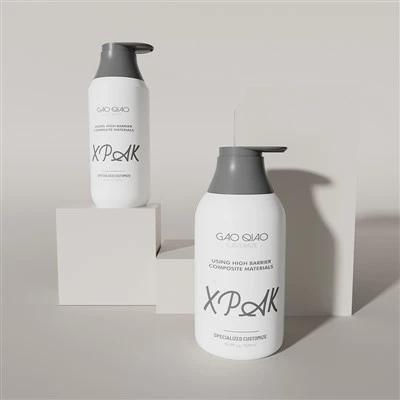
If you’re sourcing HDPE bottles for your brand, don’t settle for a one-size-fits-all answer. Surface smoothness might seem like a small detail, but it makes a big difference for how your product is perceived, how it performs, and how happy your customers are. We’re here to talk through your specific needs, whether that’s a smooth high-gloss bottle for a premium skincare line, a matte smooth bottle for a natural cleaning product, or a custom surface finish that meets a unique requirement. Reach out to our team to discuss your project, and let’s create HDPE bottles that work exactly for your brand.
Hair and Body Care Packaging References
- Crawford, R. J. (1998). Plastics Engineering. Butterworth-Heinemann.
- Rosato, D. V., & Rosato, M. G. (2000). Blow Molding Handbook. Hanser Publishers.
- Saechtling, H. (2009). International Plastics Handbook for the Technologist, Engineer, and User. Hanser Publishers.
- Spear, J. L., & Pittman, S. L. (2015). Polymer Surface Roughness Effects on Adhesion in Packaging Applications. Journal of Packaging Science and Technology.
Gaocho Industrial (Guangdong) Co., Ltd.
Gaocho Industrial (Guangdong) Co., Ltd. is one of the most professional hdpe bottles manufacturers and suppliers in China. We have world-leading production equipment and strong manufacturing capabilities. We warmly welcome you to wholesale customized hdpe bottles at competitive price from our factory.
Address: Floor 1-4, Building 3, No. 19, Yonghuan Road, Jintian Industrial Zone, Huadong Town, Huadu District, Guangzhou City, Guangdong Province, China.
E-mail: sale03@gaopack.com
WebSite: https://www.gaobottle.com/
