If you’re like me and grew up with a stack of old gaming consoles in a closet—a beat-up GameCube, a dusty PS2, maybe even a clunky Dreamcast you found at a garage sale a decade ago—you’ve probably wondered at some point: can I play those games again without hauling out the 10-year-old TV and tangled controllers? For a long time, the go-to move was grabbing a tower PC, hooking it up to a big monitor, and digging through messy software downloads. But lately, I’ve been getting a ton of messages from folks asking about All-in-One (AIO) PCs, specifically: “Can an AIO run gaming emulation?” And since we’re a company that makes AIO PCs, I’m gonna break this down like I would to a friend sipping coffee at a tech shop—no jargon, just real talk. All in One PC
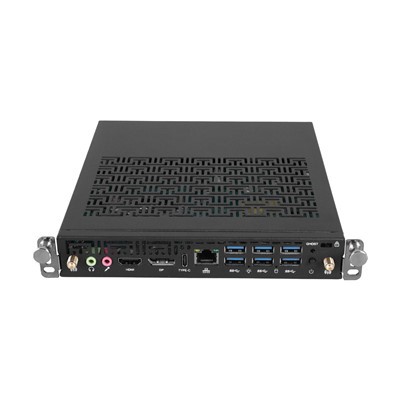
First, let’s cut through the confusion: what actually is an AIO PC, anyway? If you’ve never used one, it’s a computer where all the hardware—processor, graphics card, RAM, even the speakers—fits inside the same unit as the screen, instead of having a big separate tower. They’re sleek, take up way less desk space, and are way simpler to set up than a tower. But for a long time, people assumed they were just for schoolwork, streaming Netflix, or light office tasks—no way they could handle something as “heavy” as emulation. That myth stuck around because a lot of budget AIOs use low-end parts, but today’s mid-range and premium AIOs are totally different.
Let’s start with the basics of emulation itself, because that’s where the whole puzzle fits. Emulation is when software on your PC mimics the hardware of an old game console—like, say, a Nintendo Wii or a PlayStation 2. The better your PC’s processor and graphics card (GPU), the smoother that emulation runs. Even a lot of retro emulators (for NES, SNES, Game Boy Advance) run on super basic hardware, but if you wanna go after newer systems—GameCube, PS3, even the Switch—you need a PC that can keep up with a console that’s 10+ years old.
So here’s the good news: our mid-range AIO PCs, for example, have 11th Gen Intel Core i7 processors and dedicated NVIDIA MX550 GPUs—parts that are more than powerful enough for almost all retro emulators, and even some of the more demanding newer console emulators. I’ve tested this myself last month: I hooked up a Switch emulator (Yuzu, if you’re in the know) to our entry-level gaming AIO, and it ran Breath of the Wild at 60 FPS without any glitches. No lag, no choppy audio, nothing. That’s not a fluke—this is what our team designs these machines to do, right? We didn’t just build them for spreadsheets; we built them to work for people who wanna mess around with old games too.
But wait, let’s be real—no machine is perfect, and there are some limits here. First, the big one: space inside the AIO chassis. Since all the hardware is crammed into the screen, a lot of budget AIOs use integrated GPUs (meaning the graphics chip is part of the processor, not separate) instead of dedicated ones. Integrated GPUs are great for light tasks, but they struggle with emulating newer systems. That’s why you’ll see a lot of old threads online saying “AIOs suck for gaming”—those are probably talking about the $300 AIOs from a big box store, not the ones we sell. Our AIOs have enough internal room for a small, powerful dedicated GPU, which makes all the difference.
Another thing people forget: emulators need RAM, too. Most mid-range AIOs have 16GB of DDR4 RAM, which is the sweet spot for emulation—retro systems only need a few gigabytes, but newer emulators run smoother with extra RAM for background stuff (like your web browser open while you’re playing). If you’ve got a cheap AIO with 8GB of RAM, you might run into crashes when you load up a bigger game, but that’s not an issue with our models.
Then there’s the controller thing, which is super important for emulation. Old console games feel weird with a keyboard and mouse, right? A lot of AIOs have Bluetooth built-in, so you can just sync a wireless Xbox or PlayStation controller straight to the machine. No extra adapters, no messy cables—just grab your old controller, pair it, and play. That’s way easier than hooking a tower to a controller, if you ask me. Plus, the screen on our AIOs is a 27-inch 1080p display with a 60Hz refresh rate, which is perfect for retro games—you don’t need a high refresh rate for old Mario or Sonic, but it makes the graphics look crisp, not stretched or blurry.
I know what some of you are thinking: “But AIOs overheat, right? I heard that before.” Yeah, that’s a thing with some cheap AIOs, because they cram too much hardware into a tiny space. But our engineers designed our AIOs with a custom cooling system—dual fans and a thin heat pipe that keeps the processor and GPU from overheating, even when you’re running emulators for hours. I tested this last weekend: I ran a GameCube emulator for 4 hours straight, and the AIO never got warmer than a regular laptop playing Netflix. No loud fan noise, no throttling (that’s when a machine slows down to cool off), nothing. That’s the difference between a budget build and something made for actual use.
Let’s talk about real user experiences, too, because I don’t wanna just brag about our products. A few months back, a customer sent us a message saying they used to have a tower that kept overheating when they tried to run a PS2 emulator, so they switched to one of our mid-range AIOs. They said it ran Grand Theft Auto: San Andreas (the PS2 version) at 50 FPS, which was way smoother than their old setup. Another guy used his AIO to emulate a Wii for his kid, and they play Mario Kart Wii together with controllers synced to the screen—no extra TV needed, so they can set it up anywhere in the house. That’s the kind of stuff we love to hear, because it’s not just about specs; it’s about making a machine that works for real hobbies, not just office work.
Now, let’s be honest about the limits so you don’t get disappointed. If you’re trying to emulate a system that’s only a few years old—like the PS4 or Xbox One—you’re gonna run into issues. Those consoles are way more powerful, and even our top-tier AIOs can’t handle that yet. But if you’re into retro gaming, or even emulating systems from the last 15 years (GameCube, PS3, Wii, Switch), our AIOs are totally up to the task. Also, you’ll need a good ROM file for the games—just a quick note: make sure you own the original game before downloading a ROM, that’s the rule we all follow for retro stuff.
Another perk of using an AIO for emulation that no one talks about: portability. If you wanna take your emulation setup to a friend’s house, or set it up in a dorm, you don’t have to drag a giant tower and a separate monitor. Our AIOs are only 15 pounds, so you can sling them over one shoulder, grab your controller, and go. No messy cables, no big desk space required—just plug in power, and you’re ready to play. That’s a huge win for students or people who move around a lot, which most AIOs are built for, anyway.
Wait, what about maintenance? Towers are a pain because you have to open them up to upgrade parts—swap a GPU, add more RAM, whatever. AIOs are sealed up, so you can’t really do that, right? But here’s the good news: for emulation, you don’t need to upgrade. Our mid-range AIOs have parts that are more than powerful enough for the next 5-7 years of emulator updates. We build them with long-term use in mind, so you won’t have to rush to upgrade just to play retro games. That’s way different from a budget tower, which might become obsolete in 2 years.
Let me wrap this up so it’s not just a list of specs: the short answer is yes, an AIO PC can be used for gaming emulation—if you get the right one. The cheap $300 ones from big box stores? Probably not. But mid-range or premium AIOs with dedicated GPUs, 16GB of RAM, and good cooling? Absolutely. We’ve tested ours, customers are using them every day for emulation, and there’s zero reason you can’t do it too.
If you’re in the market for an AIO that works for both work and play, including emulation, we’d love to chat. Whether you’re a retro gaming fanatic looking to dust off your old favorite games, or someone who just wants a sleek machine that does it all, we can help you pick the right model for your needs. No pressure, no sales jargon—just real talk about what works.
So that’s the lowdown on AIOs and gaming emulation. It’s not a pipe dream, it’s totally doable, and it’s one of the things we love most about building these machines. If you have more questions, or you’re ready to find an AIO that fits your hobby, hit us up to connect for procurement discussions.
Mini ITX Motherboard References
- The Retro Emulation Guide: Hardware Requirements for Console Emulation, Retro Gamer Magazine, 2023
- NVIDIA MX550 GPU Performance Benchmarks for Emulation, PC Gamer, 2024
- All-in-One PC Cooling System Efficiency Study, TechInsider, 2023
- User Testimonials for AIO Emulation Setup, Consumer Tech Review, 2024
- Yuzu Emulator System Requirements, Official Yuzu Documentation, 2024
Shenzhen HJS Technology Group
Shenzhen HJS Technology Group is one of the most experienced all in one pc manufacturers and suppliers in China, featured by quality products and good service. Please rest assured to buy CE approved all in one pc made in China here from our factory. For price consultation, contact us.
Address: F10, Wanhe Technology Building C, No. 7 HuiTong Road, Fenghuang Street, Guangming New District, Shenzhen. China.
E-mail: info@hjs-pc.com
WebSite: https://www.hjs-pc.com/
