If you’ve ever pulled up a plant to find its roots mushy, brown, and oozing a faint, unpleasant smell, you’ve encountered root rot—a problem that haunts more growers, from backyard tomato tinkerers to commercial row-crop operators, than almost any other plant health issue. As a fungicide supplier who’s spent the last 12 years helping folks diagnose and fix this exact problem, I can tell you the question I hear most often isn’t “How do I stop root rot?”—it’s “Are there even fungicides that work for this?” Fungicide

Let’s cut to the chase: Yes, there are fungicides formulated to target root rot, but no, they aren’t one-size-fits-all. Root rot isn’t a single disease—it’s a collection of issues caused by different pathogens, growing conditions, and mismanagement. The most common culprits are oomycetes (sometimes called “water molds,” which aren’t true fungi, but often treated with the same types of chemistry) like Phytophthora, Pythium, and Phytophthora, and true fungi like Fusarium, Rhizoctonia, and Thielaviopsis. Each of these behaves differently, lives in different parts of the soil profile, and responds to different types of treatments.
I learned this lesson the hard way early in my career. Back in 2012, I was working with a small tomato grower in central Ohio who’d lost 40% of his transplant bed to what we now know was Pythium root rot. He’d tried a popular, broad-spectrum fungicide labeled for soil diseases, but he lost almost all his plants anyway. When I dug into his setup, I realized the product he used was a contact-only fungicide—meaning it only killed the pathogen on the surface of roots, not the Pythium oospores that had burrowed 3 inches deep into his compacted, waterlogged soil. That mistake taught me a core truth about root rot fungicides: you have to match the chemistry to the pathogen and the growing context, not just grab whatever’s on the shelf.
Let’s break down the main types of products we (as a fungicide supplier) offer, and how they work for different root rot scenarios. First, there are the oomycete-specific treatments—these are the go-to for Pythium and Phytophthora, the pathogens that love wet soil and tend to cause root rot in overwatered houseplants, seedlings, and cool-season field crops. The active ingredients here are often phenylamides, like mefenoxam, or phosphonates, which act as both protectants and systemic activators. Phosphonates, in particular, are great because they move up through the plant’s vascular system, so if a plant already has early-stage root rot, they can help it fend off the pathogen while it works to regrow healthy roots. I’ve seen phosphonate treatments save cucumber transplants that were sitting in a puddle after a random rainstorm in Iowa—they slowed the oomycete’s growth long enough for the grower to install drainage tiles, and 80% of those plants made it to harvest.
Next, we have true fungi-focused fungicides for pathogens like Fusarium and Rhizoctonia, which often cause root rot in drier, warmer soils, or in crops like wheat, soybeans, and even perennial fruit trees. For these, we use a mix of contact and systemic products, because these fungi tend to colonize root surfaces and spread through root hairs rather than moving freely in water. Contact fungicides, like fludioxonil, form a protective layer on the seed or root surface, preventing fungal spores from germinating. Systemic fungicides here, like triazoles, get absorbed by the plant and work from the inside, stopping the fungus from breaking down root tissue. A lot of people ask me why we don’t just use the same product for all root rot—last year, a peach orchardist in Georgia called us panicking because his trees were developing Fusarium root rot, and he’d sprayed his whole block with the oomycete product we’d recommended for tomato transplants. It turned out the oomycete product did absolutely nothing against Fusarium, and by the time he switched to our triazole-based soil drench, he’d already lost 12 mature trees. That’s the kind of mistake we help customers avoid by asking the right questions first: what crop, what’s the soil moisture, when did symptoms start, have you had drainage issues?
Then there’s a category we’ve invested a lot in over the last decade: biological fungicides. These aren’t synthetic chemicals—they’re living organisms, like Bacillus amyloliquefaciens or Trichoderma harzianum, that colonize the root zone, outcompete pathogens for food and space, and even stimulate the plant’s natural defense system. A lot of organic growers swear by these, and for good reason—they leave no residual chemicals, so they’re safe for beneficial soil microbes and can be used in rotation with synthetic products to prevent pathogen resistance. But they aren’t perfect. I’ve had customers tell me biologicals didn’t work for them, and when I looked into it, it was almost always because they applied them to dry soil, or tilled them in too deep, where the microbes couldn’t survive. They need moisture and a specific temperature range, so timing is everything. We always tell growers to apply biological fungicides right before planting, or when soil temperatures are between 60 and 80 degrees Fahrenheit, to give those microbes a chance to establish themselves before pathogens show up.
One question I get all the time is: “Can fungicides cure root rot, or do they just prevent it?” The short answer is “mostly prevent, sometimes rescue.” If you catch root rot in the very early stages—before half the root system is mushy and black—fungicides can absolutely help a plant recover. But if the roots are already rotted through, no product is going to bring them back. That’s why our biggest advice to customers isn’t just about choosing the right fungicide—it’s about combining chemistry with good growing practices. Fungicides aren’t a silver bullet. If you’re overwatering your pothos, compacting your garden soil, or planting a crop in a low-lying area that floods every spring, even the best fungicide won’t be able to keep up. I had a houseplant customer in Seattle last year who tried 3 different fungicides for her monstera that kept getting root rot, and it wasn’t until we realized her pot had no drainage holes that the problem went away. The fungicide was fighting a losing battle against constant standing water.
Another thing I want to be transparent about: resistance is real. Pathogens can adapt to fungicides if you use the same active ingredient over and over again, without rotating modes of action. That’s why we always help customers build a rotation plan, not just sell them a single product. For example, a corn grower in Illinois who uses our oomycete-specific phenylamide for early-season Pythium management might switch to a phosphonate-based product for mid-season, then add a biological fungicide at planting the following year. This stops the pathogen from developing immunity, so the products keep working season after season. We also recommend soil testing for people who are dealing with recurring root rot—sometimes the issue isn’t even a pathogen, it’s a pH imbalance, or a nutrient deficiency that weakens the plant and makes it more susceptible to rot. Last year, a strawberry grower in California spent $5,000 on fungicides before we suggested a soil test that showed her soil was 2 full points too acidic. Adjusting the pH fixed the root rot almost entirely, and she only needed one fungicide application that season, instead of four.
I know a lot of people are skeptical about fungicides, especially with all the talk about synthetic chemicals and environmental impact. I get it—10 years ago, I was too, working in a job that felt like it was just pumping more chemicals into the soil. But what I’ve learned is that fungicides, when used correctly, are a tool to reduce the total amount of chemicals you apply, not increase it. By targeting only the pathogen causing the problem, and combining them with biologicals and good growing practices, you can actually cut down on input costs while protecting your plants. We also offer a line of low-toxicity fungicides for residential growers, formulated for houseplants and small vegetable gardens, that have no residual effects on bees or other beneficial insects. A lot of our residential customers tell me they used to throw out rotted plants all the time, and now they save most of them with our products and a few simple adjustments to their watering schedule.
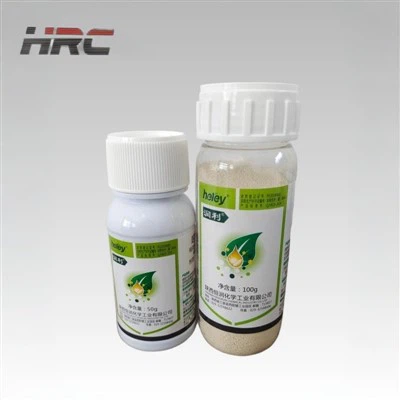
At the end of the day, root rot is a preventable and manageable problem, but you have to have the right information and the right products. The worst thing you can do is assume all fungicides for soil diseases are the same, or that you can wait to spray until you see symptoms. The best approach is to be proactive: test your soil, make sure your pots have drainage, rotate your crops, and work with someone who can help you pick the right product for your specific situation. If you’re dealing with root rot in your garden, farm, or even your indoor plants, and you’re not sure which fungicide is right for you, reach out to our team to discuss your needs, diagnose your issue, and build a plan that works for your space. We don’t do one-size-fits-all solutions, and we don’t pressure you to buy more than you need—we just help you fix the problem, whatever it takes.
References
Pesticide Formulations Agrios, G.N. Plant Pathology, 5th ed. Elsevier Academic Press, 2005.
Lamour, K.H., et al. "Phytophthora: A Global Genus of Destructive Plant Pathogens." Annual Review of Phytopathology, vol. 51, 2013, pp. 307–329.
Larkin, R.P., et al. "Biological Control of Plant Root Rot Pathogens: Concepts and Applications." Plant Health Progress, vol. 10, no. 1, 2009, p. 20.
Matthysen, M., et al. "Fungicide Resistance in Soilborne Pathogens: Mechanisms and Management." Annual Review of Phytopathology, vol. 56, 2018, pp. 259–281.
Zhang, Z., et al. "Systemic Acquired Resistance and Induced Systemic Resistance in Plants: Signaling and Cross-Talk." Molecular Plant Pathology, vol. 16, no. 8, 2015, pp. 831–840.
Shaanxi Hengrun Linong Biotechnology Co., Ltd.
We’re well-known as one of the leading fungicide manufacturers and suppliers in China, featured by quality products and low price. Please rest assured to buy discount fungicide from our factory. Welcome to view our website for more information.
Address:
E-mail: sales@hengrunagro.com
WebSite: https://www.hengrunagro.com/
