If you’re deep in the forging game, you’ve probably heard folks throw around “bogie hearth furnace” like it’s some niche, fancy gear—but let me tell you, these things are workhorses that most forging shops can’t stop raving about. As a bogie furnace supplier, I talk to forging operators, foremen, and even plant managers every single day, and their number one question isn’t just “what does this furnace do?” It’s “why would I drop my existing heating setup for one?” Bogie Furnace
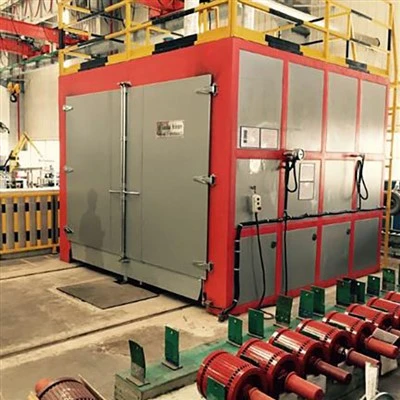
First, let’s cut through the jargon so we’re all on the same page. A bogie hearth furnace is basically a big, insulated box—think of it like a super sturdy oven—with a movable “bogie” (that’s the flat, wheeled platform) that pulls in all your heavy forged parts, whether it’s a single 2-ton crankshaft or a pallet of 50 small truck suspension brackets. No more trying to hoist a 3000-pound part into a fixed hearth with a crane and burn your hands on hot metal. That mobility alone is a game-changer, but the real magic is in how it’s used across tons of forging applications. Let’s break down the actual, day-to-day uses, not just the textbook stuff.
The biggest application we get asked about, hands down, is pre-heating for heavy forging. Let’s be real—heavy forgings like turbine rotors for power plants, crankshafts for semi-trucks, or large gear blanks for mining equipment? Those bad boys can weigh 5, 10, even 20 tons. You can’t just crank up a regular furnace and toss them in—they’ll develop thermal stress, crack, or warp so bad you’ll waste thousands of dollars in raw material. Bogie hearths solve that because they heat parts super evenly, no hot spots around the edges. A buddy of mine runs a forging shop in Ohio that makes wind turbine hub forgings—he told me he used to lose 1 out of every 8 hubs to thermal cracking with his old batch furnace. Since he swapped to a bogie hearth furnace from our line? That number’s down to like 1 out of 50. Why? Because we design our bogie hearths with programmable temperature ramps—so you can set it to heat the part 50 degrees per hour until you hit 1200°F, then bump it up to your forging temp over 12 more hours. No sudden heat shocks, no broken parts. That’s the kind of win that pays for the furnace in, like, six months.
Next up: post-forging annealing and stress relief. Once you hammer a part into shape, all that forging heat and pressure leaves internal stresses in the metal. If you don’t get rid of those, the part will crack while you machine it, or even fail out in the field—ask any automotive tech about crankshaft cracks from hidden stress, it’s a nightmare. Bogie hearths are perfect for this because you can cool parts super slowly too. The bogie pulls the entire load of parts into the furnace, you lock the door, and you control the cooling rate so the metal relaxes evenly. A lot of shops use bogie hearths here because you can process mixed loads too—like, if you have a pallet of small engine valves and a couple of medium-sized axle parts that both need annealing at 1100°F, you can load them all together. No need for separate furnaces for each part size. That cuts down on downtime and energy costs, which is huge for small to mid-sized forging shops that don’t have endless space for gear.
Wait, let’s not forget about normalizing, either. Normalizing is that step between forging and machining where you heat the part above its critical temperature, then let it cool in air to fine-tune the metal’s grain structure so it’s strong but still machinable. Bogie hearths are ideal for normalizing large, complex shapes—like truck frame components or railcar couplers—because the uniform heating means the entire part gets the same grain structure. No soft spots in one section that’ll wear out fast, or hard spots that’ll break when you’re machining. I’ve had a couple of railway forging clients tell me they use our bogie hearth furnaces for normalizing couplers, and their quality control rejections dropped by 22% in the first year. That’s not just a number—that’s less scrap, less rework, and more money in their pockets.
Another underrated use: pre-heating for hot stamping, especially for automotive parts. A lot of car manufacturers are switching to high-strength steel for things like B-pillars and door beams to make cars safer and lighter. Those steels need to be heated to like 1700°F before stamping, and if you heat them unevenly, they’ll warp when you stamp them. Bogie hearths can handle large batches of these small, thin parts without warping because we use uniform circulation systems—no dead air spots in the furnace where parts stay cold while others overheat. Plus, the bogie lets you pull the entire load of parts out in one go and move them straight to the stamping press, so you don’t lose time transferring parts one by one with a crane. That cuts down on cycle time, which is huge for high-volume automotive production.
Oh, and let’s talk about smaller forging operations too, not just the big power plant and auto shops. A lot of medium-sized forging shops make things like hand tools, garden equipment parts, or small agricultural components. They don’t need a giant 20-ton bogie hearth, they need something that can handle a few hundred pounds of parts per run. Our mid-sized bogie hearths are perfect for that—they’re compact enough to fit in a shop that’s not a 100,000-square-foot factory, but still have the same uniform heating and temperature control as the big ones. A client in Indiana that makes hay forks and shovel parts told me he used to use a regular box furnace that could only hold 50 parts at a time. Now with our bogie hearth, he loads 200 parts, runs an annealing cycle while he’s forging the next batch, and cuts his labor time by almost half. That’s the kind of efficiency that makes small shops competitive against the big guys.
Wait, but I know what some of you are thinking: “Bogie furnaces are expensive, right?” Yeah, upfront they’re a bigger investment than a basic box furnace, but let’s do the math. Let’s say you run a forging shop that does 100 heavy crankshaft forgings a week. With a bad batch furnace, you’re losing 10 parts a week to thermal stress or uneven heating—at $1500 a part, that’s $15,000 a week in scrap. A bogie hearth furnace reduces that to 2 parts a week, so you’re saving $12,000 a week, which adds up to over $600,000 a year. That’s way more than the cost of the furnace. Plus, bogie furnaces are energy efficient—they’re insulated way better than old furnaces, and you can program them to turn off or lower temperature when the cycle is done, so you’re not wasting energy heating an empty furnace all day. We’ve had clients cut their energy bills for heat treatment by 30-40% after switching to our bogie hearths. That’s more cash flow for raw materials, new equipment, or even raises for your team.
But let’s be real, bogie hearths aren’t for every job. If you’re forging small, low-volume parts that only need a quick heat, a bogie hearth might be overkill. But if you’re doing heavy forgings, annealing large batches, or need consistent quality for parts that go into critical applications (like aerospace components, railway parts, or power generation equipment), a bogie hearth is non-negotiable. I’ve seen too many shops try to cut corners with cheaper furnaces and end up with bad parts that get returned by customers, leading to lost contracts. Bogie hearths eliminate that risk because of their uniform heating, so your parts meet all the industry specs—like API for oil and gas, ISO for aerospace, or SAE for automotive. That’s a big deal for getting new clients, because they know your parts are going to perform.
At the end of the day, forging is all about quality and efficiency. If your heat treatment is messed up, even the best forging process will produce bad parts. Bogie hearth furnaces fix that by making your heat treatment consistent, efficient, and scalable. As a bogie furnace supplier, I’m not here to sell you something you don’t need—I’m here to help you figure out if a bogie hearth will make your shop better. Whether you’re a small agricultural forger looking to cut scrap, or a big aerospace plant needing to process critical turbine blades, we’ve got a bogie hearth that fits your needs.
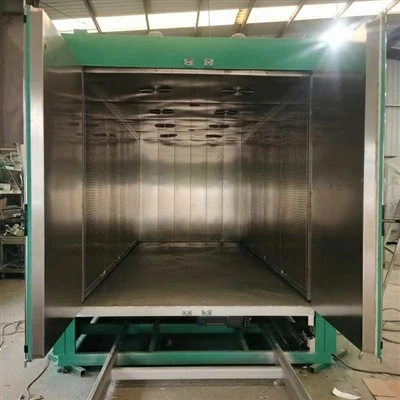
If you’re tired of scrap parts, long cycle times, and inconsistent heat treatment that’s costing you money, hit us up to talk through your application. We don’t do one-size-fits-all solutions—we’ll help you figure out exactly what size and features you need, no pressure. Just reach out, and we can walk through how a bogie hearth furnace can take your forging operation to the next level.
Annealing Furnace References
- The Making, Shaping, and Treating of Steel, 11th Edition, Association for Iron and Steel Technology, 2003.
- Industrial Heating Equipment Association (IHEA), "Bogie Hearth Furnaces: Design and Applications for Forging and Heat Treatment", 2021.
- Forging Industry Association (FIA), "Heat Treatment Best Practices for Forged Components", 2022.
- ASM International, "Metal Heat Treating: Principles and Practices", 2018.
- Railway Supply and Manufacturing Association (RSMA), "Qualification Requirements for Forged Rail Components", 2020.
Jiangsu Fangwei Furnace Industry Co., Ltd.
Jiangsu Fangwei Furnace Industry Co., Ltd. is one of the most professional bogie furnace manufacturers and suppliers in China. With abundant experience, we are committed to providing high quality customized products with competitive price. Please feel free to buy advanced bogie furnace made in China here from our factory.
Address: No.168, HuangNian Bridge, DaoShu Town, Danyang City, JiangSu Province, China
E-mail: fangwei@fwfurnaces.com
WebSite: https://www.fwfurnaces.com/
