Hey there, Healthcare Service Robots

If you’ve ever stepped into a hospital, you know how clean they look—but let’s be real, hospital-acquired infections (HAIs) are a silent, scary problem that no one talks about enough. You might hear about them in a news blip, but do you know how many people actually get sick from them? Last I checked, the CDC says 1 in 31 hospital patients has at least one HAI on any given day. That’s a ton of folks, and it’s not just bad for their health—it’s a huge drain on hospitals too, adding billions in costs and days to stays.
As someone who runs a healthcare service robot company, I get asked all the time: “What do these robots even do that humans can’t?” Spoiler alert: They’re not here to replace nurses or doctors. Think of ’em as your extra set of hands (and a way better germ detector than any of us). Let’s break down how they’re actually cutting down HAIs, no fluff involved.
First off, there’s the big one: disinfection. You know how after a patient leaves a room, the staff has to scrub everything—bedsides, call buttons, IV poles, even the little TV remotes? It’s tedious, and let’s be honest, human fatigue is a real thing. If a nurse is already pulling a 12-hour shift and has 10 rooms to clean, some spots might get missed. That’s where our UV-C disinfection robots come in. These bad boys roll into a room, blast short-wavelength UV light that zaps bacteria and viruses on surfaces without leaving any chemical residue. I’ve seen stats that say they can kill 99.9% of superbugs like MRSA and C. diff in minutes, way faster than the 10 minutes (or more) it takes for manual cleaning with wipes. Plus, since they operate on a schedule—no tiredness, no rushing—every room gets the exact same deep clean, every single time. No more “we didn’t have time to get the back of the door.”
Then there’s patient transport. Think about all the stuff that moves around a hospital: lab samples, linens, meals, even clean surgical tools. Right now, a lot of that gets hauled by staff who’re already swamped, so they might use a cart that’s been touched by dozens of other people. Those carts are germ hubs, honestly. Our autonomous transport robots, though, are sealed, track every load, and don’t interact with other high-touch areas unless programmed to. They go straight from point A to point B, no detours, no cross-contamination. We had a client a while back—let’s just say it’s a big urban hospital—who cut their HAI rates by 22% after adding these robots. Their main reason? Less human-to-human transfer of pathogens via shared carts. It makes sense: if the only thing moving between departments is a robot, not a worker’s hands that touched a door handle, a sink, and a counter, you’re cutting out a huge germ highway.
Wait, what about those little, annoying things like linen management? You know how hospitals go through so much linens—bed sheets, gowns, blankets. If a dirty linen bag gets handled by a worker who then touches a patient’s gown, that’s a problem. Our robot linen carts are designed to separate clean and dirty linens from the get-go. They don’t mix the two, and they even scan linens to make sure nothing’s left in a patient’s room. That means dirty linens don’t get dragged past a clean supply, and no one’s accidentally reusing something that should’ve been thrown away. It’s the small stuff, but small stuff adds up when it comes to HAIs.
Don’t sleep on environmental monitoring, either. Our robots aren’t just for moving and disinfecting—some have little sensors that check air quality, surface temperatures, and even track where high-touch areas are accumulating germs. We can program ’em to snap photos of hard-to-reach spots (like under a bed or on the bottom of a IV stand) and send alerts if bacteria levels are too high. That’s way better than manual checks, which usually only happen a few times a shift. If a spot starts building up germs between cleanings, we catch it before it becomes a problem for a patient. It’s proactive, not reactive—and when you’re dealing with HAIs, proactive is everything.
I know some folks worry: “Robots are impersonal, right? Will they make patients feel alone?” Let’s address that. We’ve built our robots to complement staff, not replace ’em. For example, some of our smaller robots do medication delivery or bring water and snacks to patients. That means nurses don’t have to drop everything to run a cup of water—they can focus on the stuff only they can do, like checking on a sick kid or comforting an anxious family. Patients love it too—we’ve had so many stories of kids getting excited to “see the robot” instead of being scared, and seniors say it’s a nice little surprise. But here’s the kicker: since the robots are the ones dropping off meds or snacks, there’s less opportunity for cross-contamination. A nurse who was in a C. diff room doesn’t have to touch a food tray for a next patient—robot does that. Win-win.
Of course, I’m not gonna pretend robots are a magic fix. They’re tools, plain and simple. They work best when hospitals pair ’em with good hygiene practices—staff washing hands, cleaning properly, etc. But they’re filling gaps that humans just can’t, especially when staffing is tight (which let’s be real, most hospitals are right now). During the pandemic, I saw so many hospitals scrambling to keep up with disinfection, and our robots were the ones that got rooms ready 3x faster. That’s not a coincidence.
Here’s the thing: HAIs don’t just hurt patients. They extend hospital stays, raise costs, and put more stress on an already overworked staff. Our robots take some of that stress off, while directly reducing the risk of germs spreading. We’ve had clients tell us that since adding our transport robots, they’ve had fewer staff call out sick too—fewer germs around means healthier workers. That’s a bonus no one sees coming.
Now, if you’re a hospital admin, infection control lead, or even a nurse who’s tired of seeing patients get sick from something preventable—let’s chat. We don’t do one-size-fits-all; we’ll look at your facility, figure out where the germ hotspots are, and tailor a robot setup that works for you. No sales pitch, no jargon, just actual talk about how we can help make your hospital a safer place.
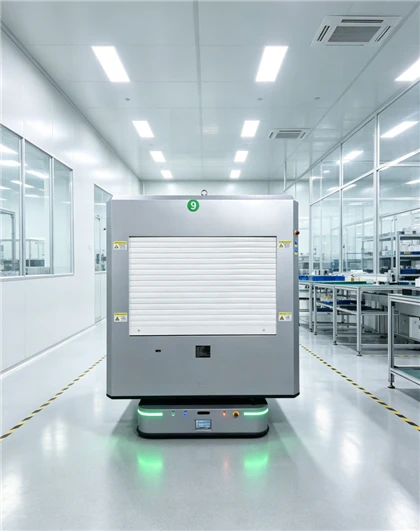
At the end of the day, healthcare is all about people—patients, staff, everyone. Our robots are just another way to make sure more people leave the hospital healthy, not with an infection they never saw coming. It’s a small change, but it’s making a huge difference.
Healthcare Service Robots References:
- Centers for Disease Control and Prevention. (2023). Healthcare-Associated Infections (HAIs). Retrieved from CDC public health resources.
- World Health Organization. (2022). Report on the Burden of Hospital-Acquired Infections Globally.
- American Hospital Association. (2021). Robotic Technology in Hospital Operations: Impact on Infection Prevention and Cost Reduction.
- Journal of Hospital Infection. (2020). Efficacy of UV-C Disinfection Robots Against Multidrug-Resistant Organisms in Acute Care Settings.
- Healthcare Facilities Management Magazine. (2022). Autonomous Transport Robots: Reducing Cross-Contamination Risks in Hospital Supply Chains.
Shenzhen Ezhan Technology Co., Ltd.
We’re known as one of the most reliable healthcare service robots manufacturers and suppliers in China. With abundant experience, we warmly welcome you to buy bulk customized healthcare service robots from our factory. If you have any enquiry about cooperation, please feel free to email us.
Address: Room 1808, 1809, 1810, Building 2, Aipark, Baolong 4th Road, Longgang District, Shenzhen City
E-mail: sales01@ezhankeji.com
WebSite: https://www.ezhanrobot.com/
