If you work with high voltage capacitors—whether you’re an electrical technician, a facility maintenance lead, a design engineer, or a hobbyist tackling a high-voltage project—you know they’re workhorses in everything from power grids and medical equipment to industrial machinery and renewable energy systems. But those same components, when charged, hold enough electrical energy to cause serious injury, even death, long after the device they’re part of has been turned off and unplugged. As a high voltage capacitor supplier, I’ve spent years walking clients through this critical step: discharging those capacitors safely. It’s not something you can rush, cut corners on, or wing. Every year, I hear horror stories from teams that skipped proper discharge steps, from mild burns to arc flashes that left equipment damaged and staff sidelined for weeks. This post isn’t about vague “safety tips” pulled from a generic manual. It’s the real, field-tested process I’ve refined working with thousands of teams across industries—plus the non-negotiables only seasoned professionals and trusted suppliers know. High Voltage Capacitor

First, let’s get one hard fact straight: a high voltage capacitor won’t discharge on its own. Even after disconnecting the unit from its power source, the charge will hang around for minutes, hours, sometimes days if the capacitor is large (think: 100µF or more, or rated for 480V AC or higher). I once had a client who thought their 1MVAR capacitor bank was “safe” because they flipped the main breaker—they came back three hours later and found a 1-inch spark when they touched the terminal. That’s not a fluke; it’s how capacitor physics works. The dielectric material inside (usually ceramic, film, or oil-impregnated paper) stores that energy like a tiny, powerful battery, and it doesn’t let go unless you intentionally give it a path to bleed off.
So step one: before you even touch a capacitor, verify it’s actually disconnected. Too many technicians skip this basic check. Here’s how to do it right: locate the circuit’s main disconnect lockout/tagout (LOTO) device, and follow your facility’s lockout procedures to ensure no one can accidentally re-energize the line while you work. Then, use a properly rated voltage tester to probe the capacitor’s terminals, not just the circuit’s output. I’ve seen cheap non-contact testers fail with stray high voltage in adjacent wiring, wasting minutes and putting teams at risk. Your tester needs to be rated for at least 120% of the capacitor’s maximum voltage rating—if your capacitor is 50kV, your tester can handle up to 60kV, no exceptions. Only proceed once that tester reads 0V across both terminals.
Now, the actual discharge. This is the part where most people make mistakes. The wrong tool, or the wrong technique, can cause a catastrophic arc. Let’s break down the proper method, using tools I recommend to every one of my clients (and have in my own workshop, after 12 years supplying capacitors to industrial, medical, and aerospace teams).
First, never use a regular screwdriver or a piece of wire to discharge a high voltage capacitor. A cheap screwdriver has a metal shaft that creates a low-resistance, high-current path, which can vaporize the metal in an instant, launching hot shrapnel and creating an arc. That’s exactly what happened to a engineer at a solar farm I worked with two years ago: he tried discharging a 600V capacitor with a flathead screwdriver, and the shaft melted, leaving a burn on his hand and a $2,000 repair bill for the capacitor’s terminal. You need a dedicated discharge resistor. For most high voltage capacitors, this means a high-wattage, high-resistance resistor (10MΩ is a standard safe value, rated for at least 1.5x the capacitor’s rated voltage). The high resistance limits the current flow so you bleed off the charge slowly—fast enough to get the job done in a few seconds, slow enough to avoid sparks or damage.
Next, build a proper discharge probe. You don’t want to hold the bare resistor with your hands. Grab a long, insulated probe (at least 12 inches of heat-resistant, rubber-insulated copper wire) with one end crimped to a metal alligator clip, and the other end connected to your discharge resistor. Add another alligator clip on the opposite end of the resistor. Now, here’s the critical order of operations: always connect the grounding clip first. That’s non-negotiable. The other end of the grounding clip attaches to a known good earth ground—your facility’s main grounding bus, or a thick, copper ground rod driven deep into the earth, never a hot water pipe or a flimsy ground wire. Once the grounding clip is secure, take the probe’s clip and touch it lightly to one terminal of the capacitor, then immediately touch it to the second terminal. Wait 10 full seconds for the charge to dissipate. For large capacitors (over 100µF), repeat this step twice, waiting 15 seconds each time—they hold more energy, so one discharge isn’t enough. I always tell clients to mark their large capacitor banks with a “discharge repeat” warning tape; it’s easy to forget that a bank of three 50kV capacitors isn’t going to bleed dry in one pass.
Wait, what about safety gear during all this? Even if you follow every step, you still need to protect yourself. I mandate to every client that anyone working on high voltage capacitors wears arc flash PPE rated for the system’s fault current, rubber insulating gloves rated for at least 1,000V (the minimum for high voltage work), safety glasses with side shields, and non-conductive footwear. No jewelry, no loose clothes that can snag, no cell phones in your pockets. I once had a client’s intern skip the gloves because he “just needed to check a terminal”—a 480V capacitor charged just enough to send a jolt through his hand that knocked him out for five minutes. That was a wake-up call for his entire team; now all their new hires go through a full week of high voltage safety training before touching any of our products.
But what if you’re dealing with a capacitor that’s still in a circuit, and you can’t disconnect it? Don’t try to discharge it while it’s under load. Even a disconnected capacitor can hold a charge, but a live circuit adds another layer of risk: current flowing through the capacitor while you’re trying to discharge it can create a backfeed, which can arc back at you. Always isolate the capacitor entirely before discharging. If that means draining capacitors in a power grid substation, or disconnecting a medical device’s capacitor during maintenance, that’s exactly what you have to do. I can’t tell you how many times I’ve been called out to fix a damaged capacitor where the team tried discharging it while the unit was still plugged in.
Another common mistake: not verifying the discharge worked. After you think you’ve bled the charge, use that same properly rated voltage tester to check both terminals again. I once had a senior technician at a manufacturing plant skip this step because he thought the resistor had done its job—turns out, a loose alligator clip had never made contact with the second terminal, leaving the capacitor fully charged. He got a painful jolt that put him on light duty for a month. Always follow up the discharge process with a second, voltage-tested confirmation. It takes 10 seconds, and it’s the only way to be sure.
What about storage? If you’re replacing a capacitor, and the old one needs to be disposed of, never leave it lying around. Even a discharged capacitor can re-gain a partial charge from ambient electrical fields or adjacent components. My team at the capacitor supplier always recommends shorting the terminals together with a small, low-resistance jumper (again, insulated, not bare metal) before transporting old capacitors to a certified e-waste facility. We also supply custom storage bags for charged and partially discharged capacitors to prevent accidental contact with other metal parts.
Now, let’s talk about when to call a pro. Not everyone is trained to work with high voltage capacitors. If you’re working on a system over 1kV, or dealing with large capacitor banks (like those used in renewable energy inverters or heavy industrial machinery), it’s worth hiring a certified electrical technician who has experience with high voltage components. I’ve had clients try to save a few bucks by doing it themselves, only to have to pay for emergency repairs when something goes wrong. As a high voltage capacitor supplier, I’m not just here to sell you parts—I’m here to make sure you use them safely. We offer on-site safety consultations, training modules, and custom discharge equipment for every client who needs it, no matter the size of their project.
At the end of the day, discharging a high voltage capacitor isn’t complicated, but it is unforgiving. The rules are simple: disconnect and lock out, use the right tools, follow the order of operations (ground first), verify twice, and always prioritize safety gear. If you’re not sure about any step, reach out to someone who knows these components inside and out—like the team at a trusted high voltage capacitor supplier, not a generic blog post that skips the critical details.
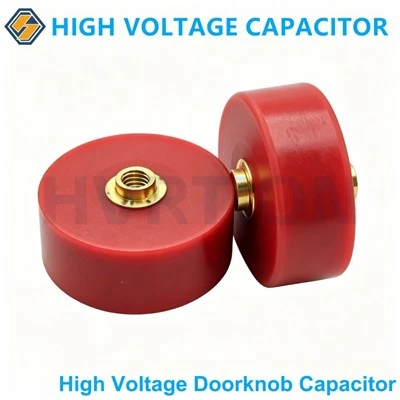
If you work with high voltage capacitors and need a reliable partner for supply, safety guidance, or custom components, connect with our team to discuss your project needs. We’re here to support you every step of the way, because your safety is just as important to us as the quality of the capacitors we provide.
HVES-V+M HV ESP Power Supply References:
- Occupational Safety and Health Administration (OSHA). Electrical Safety-Related Work Practices, 29 CFR 1910.331-1910.335, U.S. Department of Labor, 2023.
- Institute of Electrical and Electronics Engineers (IEEE). Standard for Safety in High-Voltage and High-Power Testing, IEEE Std 4-2013, 2013.
- National Fire Protection Association (NFPA). Standard for Electrical Safety in the Workplace, NFPA 70E-2021, 2021.
- High Voltage Capacitor Industry Safety Guidelines. International Electrotechnical Commission (IEC) Standard 61071, 2017.
Anshan HVRTION Electronic Technology Co., Ltd.
As one of the most professional high voltage capacitor manufacturers and suppliers in China, we’re featured by quality products and good price. Please rest assured to buy discount high voltage capacitor for sale here and get quotation from our factory. We also accept customized orders.
Address: 17 East Jiefang RD., Tiedong District, Anshan, Liaoning, China.
E-mail: hvrtion@hotmail.com
WebSite: https://www.hvrtion.com/
