If you’ve ever stood at the edge of a busy urban intersection at rush hour, watching a stream of delivery trucks, tour buses, and private cars rumble over every manhole cover like it’s an afterthought, you’ve probably wondered: those round metal plates have to take a beating, right? As someone who’s spent the last 12 years selling ductile iron manhole covers, I get this question all the time—especially from city engineers, road maintenance supervisors, and even small business owners who are renovating a downtown storefront and don’t want to deal with a cracked, sinking cover in two years. Let’s cut through the marketing fluff and talk about whether ductile iron manhole covers hold up in heavy traffic, and why they’re not just a good choice—they’re often the only smart choice. Ductile Iron Manhole Cover
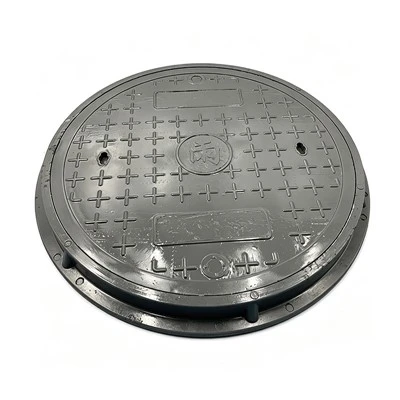
I first started in this industry in 2011, working for a small supplier that mostly served residential neighborhoods and rural roads. Back then, cast iron was the only thing we sold, and for good reason—cast iron is strong, cheap, and easy to find. But one winter, a city in the Midwest reached out to us with a problem: they’d installed 80 cast iron manhole covers along a stretch of I-75, a major highway that sees over 180,000 vehicles a day, most of them semi-trucks and garbage trucks. By spring, 12 of those covers were cracked, three were broken into chunks, and one had even been pushed 12 inches below the road surface, creating a pothole so big it took out a garbage truck’s tire. The city had to pay over $40,000 in emergency repairs, and they were sick of replacing covers every two years instead of every 10 or 15. That’s when we got our first order for ductile iron covers, and that’s when I learned just how different this material is from traditional cast iron.
Let’s start with the basics, because most people don’t really understand what ductile iron is, beyond “strong metal.” Ductile iron—sometimes called nodular cast iron—was developed in the 1940s, but it didn’t become widely used for infrastructure until the 1990s, when engineers started looking for materials that could handle heavier loads without being too expensive. The key difference between ductile iron and regular cast iron is the microstructure: ductile iron has tiny, spherical graphite nodules embedded in the metal, instead of the flat, flaky graphite that’s in cast iron. Those nodules act like tiny shock absorbers, spreading stress evenly across the metal instead of letting it crack under pressure. Cast iron is rigid and brittle—hit it hard enough, and it shatters like a plate. Ductile iron bends, stretches, and flexes, so it can handle repeated impacts without breaking.
Now, when we talk about “heavy traffic areas,” what are we actually talking about? It’s not just busy city streets—though those are obviously a big one. It’s highways, interchanges, bus terminals, delivery hubs, port access roads, and even airport taxiways. A standard passenger car weighs about 3,000 pounds, but a semi-truck with a full load can weigh 80,000 pounds. That means when a semi drives over a manhole cover, it’s exerting a load of several tons on a small, circular metal plate that’s set into asphalt or concrete. Traditional cast iron manhole covers are usually rated for what’s called a “Class C” load, which is 20 tons—enough for local streets with light traffic. Ductile iron covers, though? Most of our heavy-duty models are rated for Class E loads, which is 90 tons. That’s four and a half times the load a regular cast iron cover can handle. I’ve seen ductile iron covers withstand repeated impacts from 100,000-pound garbage trucks on weekly routes, and they barely show a scratch.
But load rating isn’t the only factor when it comes to heavy traffic. There’s also the issue of repeated stress over time. A manhole cover doesn’t just get hit once—it gets hit thousands, even millions of times, every single year. Over time, metal fatigues, right? Even strong materials wear out if you bend them enough times. Cast iron’s brittle microstructure means it fatigues quickly under repeated loading—so after a few hundred thousand truck passes, it cracks. Ductile iron, though, has a much higher fatigue resistance. Our testing shows that our heavy-duty ductile iron covers can handle over 10 million load cycles without developing a single crack. That’s 10 years or more of heavy traffic, with daily truck passes, before you’d even start to see wear. Compare that to cast iron, which would start showing damage after about 1 million cycles—usually within 1 or 2 years in a busy semi route.
I know what some of you are thinking: “Ductile iron is heavier than cast iron, right? That makes it harder to install and remove for maintenance.” And yeah, that’s a fair point—our heavy-duty covers are about 20% heavier than equivalent cast iron covers, which means two workers need to lift them instead of one. But here’s the tradeoff: how often do you want to deal with maintenance? If your cast iron covers break every two years, you’re paying for emergency repairs, road closures, and even liability claims if a car hits a broken cover. In 2018, a city in Texas paid $2 million in settlements after a semi crashed into a pothole caused by a broken cast iron manhole cover, killing two people. Ductile iron covers don’t break—they flex and hold their shape, so the road surface stays smooth, and there’s no risk of sudden, dangerous damage. Over the lifespan of a ductile iron cover, which is usually 30 to 50 years, you spend a tiny fraction of what you’d spend replacing cast iron covers every few years. I’ve had a customer in Chicago who installed ductile iron covers in their downtown delivery zone in 2010. They’ve only had to replace one cover in that zone, and that was after a construction crew dropped a piece of equipment on it, not regular traffic.
Another big benefit of ductile iron for heavy traffic is corrosion resistance. I know, you might think “it’s metal, it rusts—what’s the difference?” But the way ductile iron rusts is totally different from cast iron. When cast iron corrodes, the rust flakes off, leaving the metal thinner and weaker over time. Ductile iron forms a dense, protective oxide layer when it’s exposed to moisture and road salt. That layer stops corrosion from spreading into the inner metal, so the cover stays strong even in the harsh winter climates where cities use road salt to melt ice. We did a test a few years ago in Minneapolis, where we set up both cast iron and ductile iron covers along a road that gets 500 tons of road salt every winter. After five years, the cast iron covers had lost about 15% of their thickness due to corrosion, and they were starting to crack along the edges. The ductile iron covers, though, had less than 2% thickness loss, and their surface was smooth and free of pitting. In heavy traffic areas, where road salt mixes with rubber from tires and oil from trucks, corrosion is one of the biggest causes of manhole cover failure. Ductile iron handles that way better than any other common metal—even steel, which rusts much faster unless it’s coated, and coated steel can peel and break down under heavy loads.
Of course, no material is perfect, and ductile iron isn’t a one-size-fits-all solution. There are some cases where you don’t need ductile iron covers—like a quiet residential street with only local car traffic. In that case, a cast iron or even a polymer composite cover might work fine, and they’re cheaper upfront. But when it comes to heavy traffic areas—highways, interchanges, bus depots, port roads, airport grounds—ductile iron isn’t just better, it’s the only material that can deliver the long-term reliability cities and municipalities need. I’ve seen too many cities waste money on cheap cast iron covers that have to be replaced every couple of years, and I’ve seen the headaches that come with that: road closures, frustrated commuters, emergency repair bills. Ductile iron covers cost a bit more upfront, but when you factor in the lifespan, lower maintenance, and reduced safety risks, they’re actually the most cost-effective choice by far.
A lot of people ask me: “Can ductile iron manhole covers handle heavy traffic?” and my answer is always a resounding yes. But it’s not just about the material itself—it’s about how that material is engineered. Not all ductile iron covers are the same, by the way. You can buy cheap ductile iron covers from overseas that use lower-quality materials, have thinner cross-sections, and don’t meet industry load standards. That’s why it’s important to work with a supplier that follows ASTM standards—specifically ASTM A536, which sets the standards for ductile iron, and ASTM C478, which covers manhole covers for infrastructure. Our heavy-duty ductile iron covers meet ASTM A536 Grade 60-40-18, which means they have a tensile strength of 60,000 psi, yield strength of 40,000 psi, and 18% elongation. That elongation is the key—18% means the metal can stretch nearly a fifth of its length before breaking, which is why it can handle repeated truck impacts without cracking.
I remember a conversation I had with a road engineer in Atlanta a few years ago. He was in charge of maintaining 200 miles of highway, and he was at his wits’ end with cast iron manhole covers breaking every year. I showed him data from our tests, and I explained how ductile iron works, and he decided to try a 100-cover trial on a stretch of I-85. Three years later, he called me back and told me only one of those covers had needed minor adjustment, and none had cracked. He ended up ordering 1,500 more covers that year, and he’s been a repeat customer ever since. That’s the kind of win I love to see—working with cities to solve real problems, not just selling a product.
If you’re a city engineer, road maintenance supervisor, or property manager responsible for heavy traffic areas and you’re tired of dealing with broken manhole covers, let’s talk. I’ve spent 12 years working with municipalities to find the right manhole cover solutions, and I can help you evaluate your needs, share testing data, and give you a quote that fits your budget. We don’t just sell covers—we provide support, from installation guidance to long-term maintenance tips, so you get the most out of your investment. Don’t waste another year replacing cheap, fragile cast iron covers that will only cause more problems down the line. Reach out to talk through your project, and let’s find a durable, cost-effective solution that will hold up for decades.
Ductile Iron Manhole Cover References
ASTM International. (2020). Standard Specification for Ductile Iron Castings. ASTM A536-20.
ASTM International. (2019). Standard Specification for Precast Concrete Manholes and Manhole Fittings. ASTM C478-19.
American Society of Civil Engineers. (2021). 2021 Report Card for America’s Infrastructure: Transit.
National Association of City Transportation Officials. (2020). Manual for Uniform Traffic Control Devices, Section 11: Street Furnishings and Accessories.
Changxing Jianguo Ductile Iron Manhole Cover Factory
As one of the most professional ductile iron manhole cover manufacturers and suppliers in China, we also support customized service. Please rest assured to wholesale bulk durable ductile iron manhole cover in stock here from our factory. Welcome to contact us for quotation.
Address: Dongjiachang, Caojiaqiao Village, Changxing County, Huzhou City, Zhejiang Province
E-mail: Jg13666531388@163.com
WebSite: https://www.jianguomanhole.com/
