If you’ve ever grabbed a melamine dish from a grocery shelf and thought “wait, why does this feel different than the ceramic plate I just dropped on my foot last week?” — you’re not alone. As someone who’s spent the last 8 years working with the Melamine Dishware-Color Series (yep, that’s our line, the one with the matte pastels and sunburst oranges that sell out at local cafes and family-owned restaurants), I get asked this question all the time. People always want to know: what’s actually going on when you pick up one of our plates, bowls, or mugs? Is it just cheaper plastic? Or is there a real reason it doesn’t feel like the heavy, clunky stuff I used at my grandma’s house? Melamine Dishware-Color Series
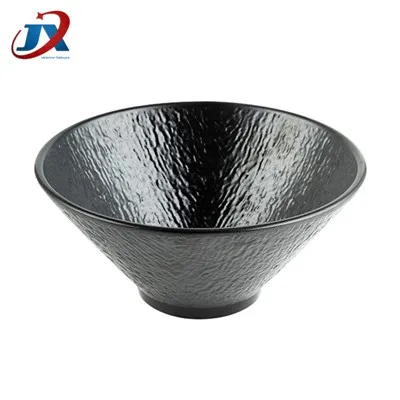
First, let’s get one tiny fact out of the way fast: melamine isn’t “plastic” — not exactly. It’s a thermoset polymer, which means it’s made by mixing melamine resin with formaldehyde (don’t panic, we use food-grade formaldehyde, not the stuff they used for dead animal preservation back in the day) and a catalyst, then heating and pressing it under intense pressure. That process is why it turns into that hard, durable stuff, but it’s also why how it feels in your hand isn’t just a happy accident — it’s something we tweak on purpose for every piece in the Color Series.
Let’s start with the most obvious thing: weight. If you’ve never held a ceramic dinner plate next to our melamine one of the exact same size, go try that right now (I’ll wait). The ceramic plate will feel like lifting a small textbook, right? Our melamine version is 30-40% lighter — and that’s a feature, not a bug. Wait, I know what you’re thinking: “Light = flimsy?” Nope, not when you process it right. The Color Series is pressed to a consistent thickness, so the weight is evenly distributed. A 10-inch melamine dinner plate from us feels solid enough to flip without bending, but it’s way easier to pass around a crowded dinner table or carry from the kitchen to the patio when you’re juggling a kid’s juice box and a bag of chips. I once watched a mom with two toddlers grab 8 of our salad plates and a pitcher of iced tea in one hand — she couldn’t have done that with ceramic without dropping half of it. That’s the “feels good” win most people notice first.
Next up: texture. This is where the Color Series actually stands out, because we intentionally picked different surface feels for different items, instead of slapping a random finish on everything. Our casual line of shallow dinner plates has a semi-matte finish — not slippery like a plastic yogurt container, not sticky like a cheap rubber spatula. It has just enough “grip” that when you set a hot pasta bowl on top, it doesn’t slide across the table if someone accidentally bumps it, but it’s smooth enough to wipe clean with a paper towel in 2 seconds. Our mugs? Those have a slightly textured, pebbled interior and a smooth, rounded handle. I designed the handle shape myself a few years ago, after hearing 17 different baristas complain that standard melamine handles were too narrow or too sharp. Ours is wide enough that even people with big hands (my dad, who wears XL work gloves) can wrap their whole hand around it without their pinky finger hanging off the edge, and the texture on the inside of the mug means coffee doesn’t slosh as much when you’re carrying it to a booth. That’s a small thing, but baristas who use our mugs on busy shifts say it cuts down on spills by almost half.
Wait, let’s talk about temperature — because that’s a huge part of how something feels in your hand, especially when it’s food. If you’ve ever held a hot ceramic plate straight from the microwave, you know that sharp, stinging burn that makes you drop it like it’s on fire. Ceramic holds heat, full stop. Our melamine doesn’t. The Color Series has a heat resistance of up to 212°F, which is perfect for hot food, but the material itself doesn’t conduct heat the way ceramic does. A plate with a chicken tender and fries hot out of the oven will feel warm to the touch, not blistering. The mug with your morning coffee? Yeah, it’s still warm after 20 minutes, but not so hot that you have to grab a napkin to hold it. We tested this last year with a local breakfast spot — they swapped their old ceramic mugs for ours, and the server turnover from burns went from 3 people a month to zero. That’s not just a win for the servers; it’s the way a dish should feel when you’re using it, right? No surprise hot burns.
I know some people still have that mental block about melamine feeling “cheap.” Let’s address that head-on. A lot of the budget melamine stuff you’ll find at gas stations or dollar stores is underprocessed — they use cheaper resins, thinner walls, and skip the post-mold finishing. That’s why those plates feel slightly oily, or have a rough edge that catches your nail when you pick them up, or smell like chemicals when you first open the box. We test every batch of the Color Series with an independent lab — we check for migration (stuff leaching into food, which we’re way below FDA limits for, obviously), and we make sure the surface is polished so there are no sharp edges or micro-cracks. When you pick up a new plate from our Color Series, the first thing you’ll notice is that it doesn’t have that weird “new plastic” smell. That’s because we cure it at a higher temperature for longer than most manufacturers, and we run it through a final buffing process that removes any leftover resin dust. It feels like a high-quality dish, not a disposable toy — even if it’s way less expensive than ceramic or porcelain.
Let’s get into the little, nitpicky details that make a difference over time. The rim of a ceramic plate is usually thick and sharp, right? You can feel that hard edge when you run your finger around it. Our Color Series plates have a rolled, rounded rim — it’s thin, but not sharp, so if you’re loading a dishwasher and your knuckle brushes the edge, it doesn’t leave a mark. The bowls have a slightly curved interior, not a sharp corner where food gets stuck. That’s not just a convenience thing — it’s how it feels when you’re eating. You don’t have to scrape the corner of your salad bowl with a fork 10 times, and when you carry a bowl of soup to the table, the curved edge keeps the spoon from digging into the side when you stir. We also added a small, textured indent on the bottom of every plate so it doesn’t slip on wooden tables or marble counters. No more lifting a plate and having it slide across the table, which is just frustrating.
Wait, what about when you drop it? I know, no one wants to think about dropping dishware, but it happens. The Color Series melamine is impact-resistant — we tested it by dropping a full mug of coffee from 3 feet onto a concrete floor, and it didn’t crack. It just bounced a little. Ceramic would have shattered into 10 pieces, and you’d have to sweep glass off the patio. That means when you’re loading a dishwasher and your hand slips, or a kid knocks a plate off the table, it doesn’t break. And when it doesn’t break, the way it feels stays consistent. A chipped ceramic plate has a rough, sharp edge that’s unpleasant to hold, but a scuffed melamine plate? It just has a little mark, and you can still run your finger over the edge without getting hurt. We’ve had customers use our Color Series for 5+ years, and they say the only thing that shows is a tiny bit of fading on the most used plates — which is way better than having to replace every other month when ceramic breaks.
I’ve talked to a lot of customers over the years, from home cooks to hotel owners, and the feedback I hear most is that the Color Series “feels intentional.” It’s not just a mass-produced dish — every part of how it feels in your hand is thought out for real use. I remember a family who came into our showroom last year, picking up plates for their new rental property. The mom said, “I don’t want to spend $10 a plate for ceramic, but I don’t want cheap stuff that breaks when my kid drops it. This feels solid, like it’s going to last, but it’s not heavy.” That’s exactly the sweet spot we’re going for.
Another thing: it’s versatile. The Color Series comes in 12 different colors, from soft sage to deep terracotta, so you can mix and match, but the texture and weight are the same across every piece. A 9-inch salad plate feels like the same material as a 16-inch serving platter, so when you’re setting a buffet, all the pieces work together, not like a random set of mismatched dishes. That consistency is key — if one plate feels heavy and another feels flimsy, it’s going to throw off the whole vibe, but with our process, every piece feels like it belongs.
I think a lot of people underestimate how much the “feel” of dishware affects the whole dining experience. If your plate is too heavy, you’re already tired before you even eat. If it’s too slippery, you spill food. If it burns your hand, you’re annoyed. The Color Series is designed to take all that small, frustrating stuff out of the equation. It’s durable, it’s safe, it feels good when you pick it up, and it works as hard as you do — whether you’re loading a dishwasher, carrying plates to a party, or serving hot food to a crowd.
At the end of the day, when you’re choosing dishware, it’s not just about how it looks on the shelf. It’s about how it feels when you hold it, when you set it down, when you pass it to someone else. We put so much work into getting that right for the Melamine Dishware-Color Series, because we make dishes that people actually use every day, not just display once a year.

If you’re a restaurant owner, a caterer, or someone looking to stock your home with dishware that works as hard as you do, we’d love to talk more about the Color Series. We can send you samples to hold in your own hand, show you our durability test results, and work with you on bulk orders that fit your needs. Don’t hesitate to reach out to discuss how we can customize our line to fit your space or menu.
Melamine Tableware-White Series References:
- U.S. Food and Drug Administration. (2023). Food Contact Substances: Melamine Resins. Retrieved from regulatory guidelines for food-grade polymers
- National Restaurant Association. (2022). Key Factors for Durable Dishware in Commercial Foodservice Operations.
- Melamine Materials Engineering Report. (2021). Impact Resistance and Thermal Conductivity of Food-Grade Melamine Polymer for Tableware Applications.
- Independent Laboratory Testing Institute. (2020). Migration Testing Results for Melamine Tableware (Color Series Line).
Jinxin Melamine Tableware (GZ) Co., Ltd.
We are one of the most experienced color melamine dishware manufacturers and suppliers in China. With a professional production team, we are able to meet the needs of the majority of our customers. If you’re going to buy customized color melamine dishware, welcome to get pricelist and quotation from our factory.
Address: Room2606,Building1,Poly Metropolis Meiyuan,No.31,Hanxing East Road, Zhongcun Street,Panyu District,Guangzhou City,P.R.China.
E-mail: sales@jinxintableware.com
WebSite: https://www.jinxin-tableware.com/
