If you’ve ever stood in front of a shelf of mass-produced household items—think a sleek kitchen utensil, a sturdy storage bin, a child’s toy, or a bathroom dispenser—you’ve held an object shaped by an injection mold. As a supplier who’s spent the last 12 years building mold bases and injection household molds for clients across North America and Europe, I’ve seen first-hand how choosing the wrong mold base doesn’t just add a few extra steps to production; it can derail timelines, blow budgets, and even sink a new product launch. Many first-time clients come to me frustrated because they skipped the critical step of vetting their mold base, opting instead to cut costs on the tooling they see as “background” to the actual cavity that shapes their part. Let’s break down exactly how to pick a mold base that works for your household application, not against it. Injection Household Mold
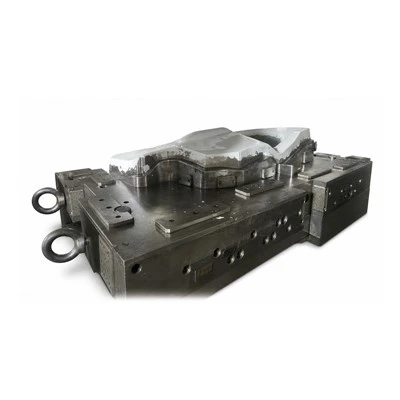
First, let’s get clear on what a mold base is, especially for household products. The mold base is the structural backbone of every injection mold: it holds the core and cavity inserts (the parts that actually form your product), aligns the mold halves during injection, and connects to your molding machine’s clamping system. For household goods, this is not one-size-fits-all. A mold base for a 1-liter plastic water pitcher is far different from one for a tiny toothbrush head, not just in size but in durability, heat resistance, and precision. One of the most common mistakes I see is clients asking for a “standard off-the-shelf mold base” for a custom part. While standard mold bases can work for simple, low-volume items like disposable plastic food containers, most household products require a custom or semi-custom base tailored to their specific needs.
Let’s start with the first core factor: your part’s volume and production timeline. Household products often fall into two categories: low-volume specialty items (think artisan storage bins for small-batch craft supplies or custom holiday decor) and high-volume mass-market goods (toilet paper holders, plastic dinnerware, kitchen tongs that sell hundreds of thousands of units a year). For low-volume runs (under 10,000 units), a standard mold base is usually a solid pick. These bases are pre-machined from steel or aluminum, readily available, and cost 20-30% less than custom bases because of mass production. But here’s the catch: low-volume bases are often built for quick turnaround, so they use thinner steel plates that can wear out faster with repeated use. If you plan to ramp up production later, a standard base might not hold up, and you’ll end up paying to replace it instead of just reworking the cavity inserts. For high-volume runs, custom mold bases are non-negotiable. I worked with a client last year who was launching a new silicone-coated measuring cup line; they started with a standard base to test their mold, but after 50,000 units, the base’s alignment pins wore down, leading to 12% of parts being rejected. Switching to a custom base with hardened steel alignment components cut reject rates to less than 1% for their 2 million unit run and saved them an estimated $45,000 in scrap and rework costs. That’s a number no household product manager wants to ignore.
Next, material selection for the mold base. This is where a lot of people get confused: the mold base’s material is different from the material of the part being molded. Most standard mold bases are made from P20 steel, a low-alloy tool steel that’s affordable, easy to machine, and durable enough for low-to-medium volume runs. For household products molded from common plastics like polypropylene (PP), polyethylene (PE), or polystyrene (PS), P20 is often perfect. But if your product uses a more abrasive material—like reinforced nylon for a heavy-duty laundry basket, or glass-filled PP for a cutting board—or if you’re running a high-volume production, you’ll want to upgrade to H13 steel. H13 is a hot-work tool steel with higher hardness and heat resistance, which means it won’t warp or wear down even after millions of injection cycles. Aluminum mold bases are another option, ideal for very low-volume prototyping or heat-sensitive household parts like thin-walled food containers. Aluminum cools faster than steel, which cuts cycle times by 10-15%, a huge benefit when you’re testing a new product or running a short order. The downside? Aluminum is softer, so it can’t handle the high pressures of high-volume molding, and it’s more prone to damage if you mishandle the mold during changeovers. I always advise clients to match the mold base material to both their part’s material and their production volume, not just what’s cheapest in the short term.
Precision is the next make-or-break factor for household mold bases. Think about the small details that make a household product feel reliable: a water pitcher’s spout that drips evenly, a toothbrush that fits firmly in its holder, a lid that clicks into place and doesn’t pop off in the dishwasher. All of these depend on mold base precision. If the mold halves aren’t perfectly aligned during injection, you’ll get flash—thin, unwanted plastic edges around your part that require extra trimming. Flash not only adds labor costs, but for household products meant to be used by consumers, it can make the product feel cheap and unprofessional. For high-precision household parts, look for mold bases that use mold halves with a flatness tolerance of less than 0.005mm and alignment pins with a runout tolerance of less than 0.003mm. Another key precision feature is the guide system: ball bushing guides are standard on many mold bases, but for high-volume runs, linear bearing guides are far more precise and reduce wear on alignment components. Last year, a client came to me after their previous mold base had 0.2mm of alignment error, leading to a thin seam line on their plastic baby feeding spoons that was a choking hazard if not trimmed properly. Swapping to a precision linear guide mold base eliminated that seam entirely, and the client passed their third-party safety testing on the first try—saving them weeks of rework and a potential product recall.
Then there’s ejection system design, which is often overlooked until it causes headaches. For household molds, ejection is what pushes the finished part out of the mold without damaging it. A bad ejection system can crack a thin-walled cereal bowl, warp a plastic storage bin, or even leave marks on a product’s exterior that require secondary finishing—something most mass-market household products can’t afford. The simplest ejection system is a push plate, which uses flat plates to push the part out evenly, great for simple, rigid parts like plastic coasters. For more complex parts with deep draws or undercuts, you need a more advanced system: ejector pins are the most common, but for parts with delicate features (like the soft silicone grips on a kitchen tool), air ejection is often better. Air ejection uses a burst of compressed air to lift the part off the core, eliminating the risk of pin marks or damage to sensitive surfaces. I once worked with a client making a set of silicone ice cube trays; their initial mold base had steel ejector pins that left permanent indentations on the tray’s bottom, ruining the sleek design. Swapping to an air ejection system fixed that, and the trays became a top-selling item in home goods stores. Another thing to consider: your mold’s ejection system needs to match the clamping force of your injection molding machine. If you pick a mold base with a large ejection stroke but your machine only has a small one, you won’t be able to fully eject your parts, no matter how good the design is.
Don’t forget about future adaptability. Household products rarely stay the same for their entire lifecycle. You might launch a basic plastic cup and later decide to add a custom logo, switch to a thicker material for durability, or even change the color multiple times a year. A good mold base should be able to accommodate these changes without replacing the entire tool. Look for mold bases with standardized mounting plates, insert-ready cavities, and easy access to core and cavity components. Modular mold bases are the best for this: they let you swap out insert plates or adjust guide systems without machining the entire base from scratch. A client of mine launched a line of seasonal plastic mugs; first they made plain white mugs, then added custom logos for brands, then switched to a double-walled design for insulation. All of those changes were done by swapping inserts in their original modular mold base, which saved them over $20,000 compared to building three separate mold bases. If you’re planning to expand your product line or run multiple product variations, adaptability isn’t a nice-to-have—it’s a cost-saving must.
Now, let’s talk about the red flags to watch out for when choosing a mold base supplier, since that’s a huge part of the process (and I’ve seen too many clients burn out by cutting corners on this part). First, avoid suppliers who refuse to provide technical specifications for their mold bases. If a supplier can’t tell you the steel grade, tolerance levels, or ejection system design, they’re likely cutting corners on quality. Second, ask for case studies specific to household products. A supplier who works with automotive molds might not understand the unique needs of household goods, like compliance with food safety standards (for kitchen or food storage products) or resistance to dishwasher use. I’ve had clients come to me after a previous supplier built a mold base that warped after 100 dishwasher cycles, not realizing that household kitchen products need mold bases made with materials that can handle repeated exposure to hot water and detergents. Third, ask about after-sales support. Mold bases need maintenance—alignment pins wear, guide systems can get dirty, and over time, you might need to make small adjustments. A good supplier will offer maintenance plans, spare parts, and technical support, not just ship the mold and disappear.
Let’s wrap this up with a quick example to tie it all together. Last quarter, we worked with a small startup that was launching a line of BPA-free plastic food storage containers for meal prepping. They came to us with a $15,000 budget for their mold base and a timeline of 12 weeks to launch. We started by analyzing their needs: 50,000 units in the first run, with plans to scale to 200,000 units in year two, parts made from food-grade PP. We recommended a semi-custom mold base made from P20 steel, with linear bearing guides (for precision), a push plate ejection system (ideal for their simple container design), and a modular insert cavity (so they could easily add custom labels later). We adjusted the design to fit their existing molding machine’s clamping force, and included a 6-month maintenance plan to help them keep the mold running smoothly. The total cost came in at $13,200—12% under their budget—and they launched their line 1 week ahead of schedule. They told us that in their first three months of sales, only 0.8% of parts were rejected, way below the industry average of 4% for household food containers. That’s exactly the kind of outcome a good mold base delivers.
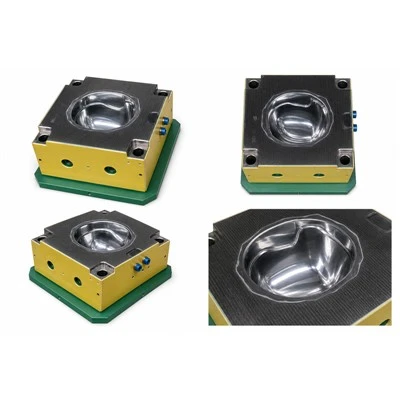
Choosing the right mold base isn’t just a technical step—it’s an investment in your product’s success. Too many household product brands focus all their budget on the part design and overlook the tooling that turns their idea into a tangible product. The right mold base balances your current production needs, future growth, and the unique requirements of household goods (durability, precision, safety, and usability). If you’re in the process of designing an injection household mold and want to walk through your options, don’t hesitate to reach out for a consultation.
Compression Mold References
Injection Molding Handbook, 5th Edition, Rosato, D.V. and Rosato, D.V., Carl Hanser Verlag, 2012.
Tool Steel Selection for Injection Molds, American Society of Mechanical Engineers (ASME) B5.1M-2018.
Household Product Design and Manufacturing Standards, International Organization for Standardization (ISO) 10993, 2021.
Mold Base Precision and Performance Guidelines, Society of Plastics Engineers (SPE) Injection Molding Division, 2020.
Taizhou Lingyue Mold and Plastic Co., Ltd.
Taizhou Lingyue Mold and Plastic Co., Ltd. is one of the most professional injection household mold manufacturers and suppliers in China, also supports customized service. If you’re going to buy advanced injection household mold made in China, welcome to get quotation from our factory. Quality products and low price are available.
Address: NO.18, Shangxian Road, North Industrial Zone, Huangyan, Taizhou City, Zhejiang, China
E-mail: ly@lingyuemold.com
WebSite: https://www.lingyuemold.com/
