If you’ve ever worked with biomass for fuel, animal bedding, or even craft materials, you’ve probably wondered about the tools you can use to turn different raw materials into uniform, usable pieces. As a wood hammer mill supplier, one of the most common questions I get from small-scale farmers, biomass producers, and woodworking hobbyists is: “Can a wood hammer mill process bamboo?” It’s a fair question—bamboo grows fast, is renewable, and has a tough, fibrous structure that’s very different from the soft, dense hardwoods or softwoods most hammer mills are designed for. The short answer is yes, but there’s a lot to know to do it effectively, without wasting material, damaging your equipment, or ending up with an inconsistent final product. Wood Hammer Mill
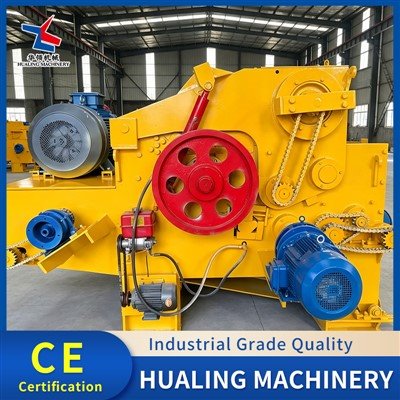
Let’s start with the basics. A standard wood hammer mill works by swinging heavy metal hammers inside a rotating drum; as you feed raw material into the mill, the hammers strike it repeatedly to break it down into smaller pieces. Those pieces then pass through a screen at the bottom of the drum—smaller screens create finer granules, larger screens create coarser chunks. Wood is a consistent, relatively uniform material, so most mills are built to handle its density and fibrousness. Bamboo, though, is a different story. Unlike solid wood, bamboo has a rigid, hollow internal structure made of thin, hard nodes and a dense, fibrous outer layer. Its tensile strength is actually higher than many woods, but its brittleness and uneven texture mean it can react differently to hammer strikes than what your mill is used to.
The first thing to get right is preparing the bamboo before it hits the hammer mill. Skip feeding fresh, green bamboo straight into the machine. Fresh bamboo has a high moisture content—usually 40% to 50%—which makes it rubbery and more likely to jam or wrap around the mill’s hammers instead of breaking down. Instead, you need to air-dry or kiln-dry the bamboo until its moisture content is between 10% and 15%. That moisture level is the sweet spot: the bamboo is rigid enough to shatter on impact, but not so dry that it becomes dusty or brittle enough to turn into small, uneven fragments. I always tell customers to test the moisture with a simple moisture meter—if you don’t have one, snap a small piece of bamboo; if it cracks with a sharp sound, it’s ready. If it bends instead, it’s too wet.
Next, size matters. Bamboo can be several inches thick at the base, so you can’t just feed full poles into a standard wood hammer mill. Even heavy-duty mills will struggle to handle bamboo poles that are too long or too thick. Before processing, cut the bamboo into pieces that are 6 to 12 inches long and strip away the hard outer skin and inner pith. The outer layer (called the epidermis) is extremely dense and abrasive—leaving it on means it will wear down your hammers and screens much faster than wood. The inner pith, on the other hand, is spongy and full of air pockets; it doesn’t grind evenly and can create too much fine dust. Stripping those layers leaves only the bamboo’s middle section, which is the consistent, fibrous core that breaks down cleanly. Some customers skip this step and wonder why their final product is a mix of fine dust and large, unbroken chunks—this is the main reason.
Now, adapting the hammer mill itself to handle bamboo is key. Most standard wood hammer mills come with hammers that are shaped for soft or medium wood, but bamboo’s density requires slightly heavier hammers or hammers with a thicker, sturdier build. If you’re using a mill designed for small-scale wood processing, upgrading to a set of carbide-tipped hammers will make a huge difference. Carbide is harder than standard steel, so it resists wear from bamboo’s abrasive fibers and delivers more force per strike to break down the material. You’ll also want to adjust the screen size. For most applications—whether you’re making bamboo pellets, bedding, or mulch—a screen with ¼-inch to ½-inch holes works well. If you use a screen that’s too large, you’ll end up with unbroken bamboo chunks; too small, and you’ll create excess fine dust that’s hard to use. I recommend starting with a ⅜-inch screen and adjusting as needed based on your final product.
Wait, but what about cases where people say their wood hammer mill didn’t work for bamboo? More often than not, it’s not the mill itself—it’s how they’re using it. I’ve seen customers try to process bamboo without drying it first, feed it in too large pieces, or use the same hammers they use for pine. Another common mistake is overloading the feed hopper. A wood hammer mill can only process so much material at once; forcing too much bamboo in at once means the hammers can’t strike each piece effectively, leading to jams. I always advise feeding material slowly and evenly, letting the mill’s internal mechanism do the work. If you hear a grinding, scraping sound instead of a steady whir, you’re probably overloading the hopper or have a piece of unprocessed bamboo stuck. Turn the mill off, empty the hopper, and check for blockages before restarting.
There are also a few specific applications where processing bamboo in a wood hammer mill works particularly well. For example, many customers use processed bamboo for animal bedding—it’s more absorbent than wood, and it doesn’t splinter as easily as pine. For biomass fuel, bamboo granules burn hotter than wood, so they’re a great alternative for pellet stoves. Even for crafts and landscaping mulch, processed bamboo has a more uniform texture and doesn’t break down as fast as wood mulch, making it longer-lasting. One customer I worked with last year used his mill to process bamboo scraps from a local construction site, turning what would have been waste into bedding for his 20 head of cattle—he cut his bedding costs by 60% just by adjusting his prep steps and mill settings.
But should you buy a new mill just for bamboo? Probably not, if you already have a quality wood hammer mill. The key is to modify your process to match bamboo’s properties, not replace your equipment. That said, if you’re planning to process bamboo regularly (say, more than 500 pounds a week), you might want to invest in a mill with heavier-duty components specifically designed for tough fibrous materials. Some mills come with optional bamboo processing kits—thicker hammers, adjustable feed speeds, and reinforced screens—that make the process even smoother.
Let’s talk about maintenance, too. Bamboo’s abrasive fibers will wear down your mill’s parts faster than wood, so you’ll need to check and replace hammers and screens more often. I recommend inspecting your hammers every 50 hours of use when processing bamboo, and replacing them when they’re worn down to half their original size. Screens should be checked after every 100 hours—bamboo dust and small fiber fragments can get stuck in the screen holes, reducing the mill’s efficiency. A quick cleaning with a wire brush will keep those holes clear, so your final product stays consistent.
Another thing to consider: safety. Processing bamboo can create fine fibers and dust, which are flammable and can irritate your lungs. Always wear a dust mask, safety glasses, and ear protection when operating the mill. Make sure your mill has a proper dust collection system to capture fine particles—this not only protects your health but also prevents dust buildup that could cause a fire. I’ve seen too many customers skip the dust collection step, and it’s a risk that’s completely avoidable.
So to circle back to the original question: Yes, a wood hammer mill can absolutely process bamboo. It’s not a matter of the mill being incapable—it’s about adapting your prep, adjusting your equipment settings, and following a few key steps to avoid common mistakes. The biggest mistake I see is treating bamboo like just another wood product; it’s a unique material, and it needs a little extra care to process well. As a supplier, I’ve helped dozens of customers make that transition, and most tell me they’re able to get high-quality bamboo product with their existing mill, just by changing how they use it.
If you’re currently testing bamboo processing for your business, or if you’re looking to set up a system that works for both wood and bamboo materials, I can help. I’ve worked with small-scale hobbyists and large biomass producers alike, and I can walk you through the right mill setup, prep steps, and maintenance routine to get the best results. Whether you’re processing bamboo for fuel, bedding, or any other use, let’s talk through your specific needs and find a solution that fits.
Wood Peeling Machine References
- Food and Agriculture Organization of the United Nations. (2018). Bamboo as a Biomass Resource for Energy Production.
- American Society of Agricultural and Biological Engineers. (2020). Standard Test Methods for Measuring Particle Size Distribution of Biomass Fuels.
- International Bamboo and Rattan Organization. (2019). Processing Guidelines for Bamboo for Industrial Applications.
- Hammer Mill Manufacturers Association. (2021). Operational Best Practices for Processing Non-Wood Biomass Materials.
Shandong Hualing Machine Manufacturing Co., Ltd.
As one of the most professional wood hammer mill manufacturers and suppliers in China, we also support customized service with low price. Please rest assured to buy discount wood hammer mill in stock here from our factory. If you have any enquiry about quotation, please feel free to email us.
Address: Industrial Park, Dagong Village, Changshan Town, Zouping City, Shandong Province
E-mail: hualing@sdhualing.com
WebSite: https://www.hualingmachine.com/
