If you’ve ever worked in industrial automation or process safety, you’ve probably leaned on programmable logic controllers (PLCs) to keep machinery, assembly lines, or production facilities from veering into dangerous territory. For decades, traditional safety PLCs have been the gold standard for functional safety—taking over when a standard PLC spots a hazard, cutting power to a motor, or locking a door to a robot cell before an operator can step inside. But over the last three years, I’ve spent every day talking to plant managers, safety engineers, and system integrators who’ve started asking a different question: Why are we still tying ourselves to rigid, siloed safety tools when our operations are already using edge computing, cloud analytics, and real-time data to run more efficiently? As a supplier of Integrated Safety Edge solutions, I’ve seen the shift firsthand—so let’s break down the real differences between these two safety workhorses, no marketing fluff, just the kind of context I wish someone had given me when I was troubleshooting my first safety PLC project 15 years ago. Integrated Safety Edge
First, let’s ground both terms in what they actually do, because a lot of people mix up regular PLCs, standard safety PLCs, and edge-based safety tools. A traditional safety PLC is a dedicated, certified hardware unit designed exclusively for safety-related functions. Its whole job is to monitor input devices—like emergency stop buttons, light curtains, door interlocks, or pressure sensors—and trigger a safety action if those inputs trip a hazard threshold. It’s built to be fail-safe: if it loses power, it defaults to a safe state (like shutting off a machine), and it’s audited to meet standards like IEC 61508 or ISO 13849, the global rules for functional safety. For 90% of the 2000s and 2010s, this made perfect sense. Safety was a silo: you didn’t mix safety data with production data, because safety tools were separate, and IT systems weren’t connected to OT (operational technology) networks the way they are now.
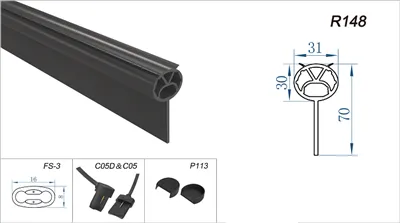
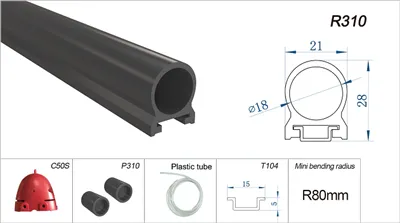
Now, what’s an Integrated Safety Edge? Unlike a traditional safety PLC, it’s not a standalone box. It’s a modular, software-integrated platform that brings safety logic right to the edge—meaning it sits at the edge of your network, right where your machines and sensors live, instead of back in a central control room. It still meets those same IEC 61508 and ISO 13849 safety standards, so it’s just as reliable for hazard stopping, but it doesn’t work in a silo. It’s built to merge safety data with the real-time operational data you’re already using to optimize production: things like machine cycle times, energy use, or quality metrics. That’s the core difference, but let’s dig into the nitty-gritty where it actually matters for your bottom line and your safety team’s sanity.
Let’s start with deployment and flexibility, because this is where most users hit a wall with traditional safety PLCs. A few years back, I worked with a food and beverage plant that had 12 packaging lines, each with its own traditional safety PLC. When they wanted to add a new light curtain to a line to prevent operator access during changeovers, they had to: 1) Order a new safety module for the PLC, 2) Hire an integrator to wire it, 3) Program the safety logic from scratch, 4) Audit the whole system, and 5) Downtime the line for 12 hours. The whole process cost them $45,000 and a full day of lost production. With an Integrated Safety Edge, that same light curtain would plug into the edge node right at the line, and you’d use a software-based safety configurator to drag-and-drop the light curtain into the existing safety logic library. Deployment took 45 minutes, no rewiring, no line downtime, and the audit was done digitally instead of with a 100-page binder of hand-drawn schematics. Traditional safety PLCs are hard-coded for specific safety tasks; changing even a single input means hardware or firmware updates, which take time and carry compliance risks. Integrated Safety Edge uses software-defined safety, so modifications are fast, repeatable, and still compliant.
Next, data visibility and post-incident analysis, which is where the rubber meets the road for continuous improvement. Let’s say a machine tripped a safety stop last week—maybe a door interlock wasn’t fully latched, or a pressure sensor spiked. With a traditional safety PLC, the only data you get after the fact is a generic “safety trigger” alarm, a timestamp, and maybe which input tripped. You can’t tell if the door was stuck because of worn hinges, or if the pressure spike was a one-time blip or a sign of a failing valve. That means your root cause analysis is stuck at “fixed it and moved on,” even if the same incident happens twice a month. With an Integrated Safety Edge, every safety event is tagged with operational context: how fast the machine was running before the stop, what the energy draw was, how many times that door had been opened that shift, and even data from other sensors that might point to a trend. The food plant I mentioned earlier used to spend 20 hours a month reviewing safety incident logs; after switching to our Integrated Safety Edge, they cut that to 3 hours, and identified that 60% of their safety stops were from worn door hinges, not operator error. They scheduled hinge replacements during planned downtime, and cut safety stops by 50% in six months. That’s not just safety—it’s operational efficiency, something traditional safety PLCs can’t touch because they don’t collect or share non-safety data.
Then there’s scalability, which is a big one for facilities that are growing or adding new machines regularly. Traditional safety PLCs are designed to handle a fixed number of inputs and outputs (I/Os) when you buy them. If your line grows, or you add a new machine with more safety sensors, you have to add more hardware—new PLCs, new I/O modules, more cabinets. A mid-sized manufacturing plant with 20 lines might end up with 20 separate safety PLCs, each with its own firmware updates, compliance audits, and maintenance schedules. That’s a logistical nightmare for safety teams, who have to keep track of 20 different systems to make sure none are out of compliance. An Integrated Safety Edge is modular: one edge node can handle up to 50 safety I/Os, and you can add more nodes as you add lines, without ripping out existing hardware. You update safety logic once across all nodes instead of 20 times, and you can pull all safety data into a single dashboard for compliance reporting. The automotive plant I work with now has 18 assembly lines; before, they had 18 traditional safety PLCs, each with its own annual audit. Now they have 4 Integrated Safety Edge nodes, and their annual safety audit took half the time, because the auditor could pull all safety logs in one place instead of digging through 18 separate binders.
But wait—some safety engineers will push back, and they’re not wrong. They’ll say traditional safety PLCs are more mature, and have been around longer, so they’re more reliable. That’s true, for small, static systems. If you have a single, simple machine with two safety inputs, a traditional safety PLC is overkill, but it’s still a proven, reliable tool. But for dynamic, connected facilities, the “proven reliability” of safety PLCs becomes a liability. They’re isolated from the rest of the network, so if a standard PLC or IT system has a cyber incident, the safety PLC is a hard, unconnected box—until you need to connect it to share data, which usually means opening it up to the network, creating a gap. Integrated Safety Edge solutions are built with OT-specific cybersecurity: they have built-in firewalls, encrypted data transmission, and access controls that don’t expose safety logic to outside threats. That’s a key point I don’t hear enough: modern safety doesn’t just mean stopping machines—it means keeping safety systems online and free from cyber risks that are becoming more common in industrial facilities.
Another difference: total cost of ownership (TCO), which is what keeps CFOs up at night. Let’s compare a 5-year TCO for a line with 3 safety inputs: a traditional safety PLC costs about $8,000 upfront, plus $2,000 in annual maintenance, firmware updates, and audit costs, plus $5,000 if you need to expand later. That’s $25,000 over 5 years. An Integrated Safety Edge for the same line costs $7,500 upfront, plus $500 a year for software updates and cloud access, and $1,000 if you expand. That’s $11,000 over 5 years—less than half the cost. And that doesn’t even count the production downtime we talked about earlier: the food plant I mentioned lost $120,000 a month in downtime from safety stops before switching, and that dropped by $60,000 a month after using Integrated Safety Edge data to fix root causes. Traditional safety PLCs don’t reduce downtime—they just prevent hazards, period. Integrated Safety Edge does both.
Now, it’s not like traditional safety PLCs are going away. For small machines, retrofits where you can’t rework the network, or facilities that run entirely isolated from IT systems, they’re still the right tool. But for most mid-sized to large industrial facilities—food and beverage, automotive, pharmaceuticals, packaging—where operations are connected, data-driven, and growing, Integrated Safety Edge is becoming the standard. The transition isn’t about replacing every safety PLC tomorrow; it’s about adding a layer of safety that works with your existing systems, instead of against them.
I’ve spent the last 7 years talking to engineers who’ve spent their careers building safety systems with traditional PLCs, and their biggest fear is moving to something new. They worry about compliance, about downtime, about learning a new system. That’s why our Integrated Safety Edge solutions are designed to work with your existing safety standards, and our team provides on-site training and audit support, so you never have to choose between safety and flexibility.
If you’re tired of siloed safety data, rigid deployment, and audits that take weeks instead of days, it’s time to talk. Whether you’re looking to upgrade a single line or your entire facility, we can walk you through a no-obligation assessment to show you how Integrated Safety Edge can cut your TCO, reduce downtime, and make your safety team’s job easier. Reach out to us at your earliest convenience to schedule a consultation.
Rubber Safety Edge References
IEC 61508:2010, Functional safety of electrical/electronic/programmable electronic safety-related systems
ISO 13849-1:2015, Safety of machinery — Safety-related parts of control systems — Part 1: General design principles
Industrial Safety Edge Computing Report, International Society of Automation (ISA), 2023
Traditional Safety PLC Deployment and Maintenance Costs, Industrial Automation Association, 2022
Ningbo Futai Safety Edge Technology Co., Ltd.
Ningbo Futai Safety Edge Technology Co., Ltd. is one of the most professional integrated safety edge manufacturers and suppliers in China, also supports customized service. Please feel free to buy advanced integrated safety edge in stock here from our factory. Contact us for free sample and discount information.
Address: No. 1116, Beihuan West Road, Jiangbei District, Ningbo City, Zhejiang Province
E-mail: info@safety-edge.com
WebSite: https://www.safety-edge.com/
