If you’ve ever been in the operating room during an UBE (Unilateral Biportal Endoscopy) procedure, you know how critical every piece of equipment is to a successful outcome. As a supplier specializing exclusively in UBE surgical power systems, one of the most common questions I hear from spine surgeons, surgical directors, and OR managers is this: “What’s the availability of parts for these systems?” It’s not a trivial question—delayed part replacements can mean cancelled cases, extended OR times, or even risks to patient safety when a power tool malfunctions mid-procedure. Over 12 years in this niche, I’ve seen firsthand how inconsistent part availability can derail a hospital’s workflow, so I want to break down exactly what you can expect from our supply chain, the factors that impact part access, and how we’ve built our operations to eliminate the headaches that come with waiting for replacement components. UBE Surgical Power Systems
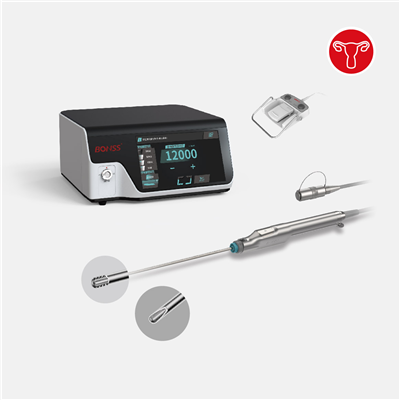
First, let’s ground this in what UBE power systems are, for anyone who might not be as familiar. Unlike traditional open spine surgeries, UBE relies on two small working portals in the spine, and power tools are designed to be compact, lightweight, and precise enough to navigate narrow anatomical spaces. The core parts of these systems aren’t interchangeable with standard orthopedic power tools—they’re machined from high-grade titanium and medical-grade stainless steel, calibrated to a fraction of a millimeter to prevent nerve or tissue damage. That specialization is why sourcing parts can be tricky for suppliers who handle a broad range of equipment, but for a dedicated UBE power systems provider, it’s our entire focus.
When a hospital reaches out to us about part availability, the first thing we assess is whether the part is a consumable (single-use or disposable) or a reusable component. Consumable parts—like cutting blades, burrs, and drill bits—are designed for one patient use per FDA guidelines, but we also offer packaged spare kits that let hospitals keep replacements on hand. For most of our standard consumables, we maintain a 98% in-stock rate at our two regional distribution centers, located on the East and West Coasts. Why two locations? Because a case in Portland can wait just as long as one in Miami, and a 2-day shipping delay might force a surgeon to use a less precise tool, which increases the risk of complications. We also adjust inventory based on regional surgical volume: if a large spine center in Texas adds four new UBE procedures a month, we boost their local inventory of burrs tailored for foraminal decompressions, so they don’t have to order from out of state.
Reusable components, like the power handpieces, motor assemblies, and cooling jets, follow a different set of rules. These are designed to last 50–75 procedures with proper sterilization (per our care instructions and OR cleaning protocols), but wear and tear—dropping a handpiece, repeated autoclave cycles, or a sudden power surge—can require replacement of a gear, bearing, or circuit board. Here’s where many suppliers fall short: they don’t manufacture reusable parts in-house, so they have to outsource to third-party machine shops that might have backlogs of 4–6 weeks. That’s a problem we solved 8 years ago when we opened our own ISO 13485-certified parts manufacturing facility, staffed by engineers who specialize in UBE power system components. Our reusable parts have a 99% in-stock rate for standard replacements, and custom parts (for older systems or specialized tools) are typically shipped in 7–10 days, not the 6 weeks you might see from generic orthopedic suppliers. Of course, custom parts do require a quick verification of your system’s model number, but that’s a simple check—we make sure to have all model specifications on file for every customer we serve, so we don’t waste time sorting through blueprints mid-order.
But availability isn’t just about what’s on our shelves. It’s also about how we respond to emergency needs, because let’s be honest—power tools don’t choose to break during a routine procedure. We offer a 24-hour emergency part dispatch service for any customer with a scheduled UBE case within 48 hours. Last quarter, a hospital in Atlanta called at 10 PM when their main power handpiece failed the night before 3 scheduled UBE discectomies. We pulled a spare handpiece from our emergency inventory, shipped it via overnight courier, and it arrived at the hospital’s OR at 8 AM the next day, right before the first case. That’s the kind of reliability we build our business on, because we know that a delay for one customer can affect dozens of patients.
Now, let’s talk about the factors that can impact part availability, because no system is perfect. The biggest one is model obsolescence. UBE technology has evolved a lot in the last 10 years—older systems that were popular in the early 2010s have different gear sizes or motor calibrations that newer systems don’t. For these, we maintain a limited backstock of parts (enough to cover 3 years of procedures, per FDA’s shelf life recommendations for medical components) for any legacy model that’s still in use. If a customer has an older system and needs a part that’s no longer in regular production, our team will first check our backstock, then our manufacturing facility to produce a custom part, usually in 10 days or less. We also work with customers to phase out obsolete systems gradually—instead of making them jump to a new, untested model, we offer discounted part pricing for legacy systems to keep their ORs running while they transition.
Another factor is supply chain disruptions, which we all experienced during the pandemic, right? When global shipping delays made it hard to source high-grade medical-grade titanium, we invested in a local domestic supplier for 70% of our raw metal, so we’re less dependent on international shipping. That means even when port delays or raw material shortages hit, our part production stays on track. We also maintain a 10% buffer inventory for all high-demand parts, so if a sudden surge in cases (like a spine specialty center adding UBE to their roster) happens, we don’t run out mid-month. We communicate openly with customers when a rare part is on backorder—no more waiting 2 weeks to find out your order won’t ship. We send a notification via email and text within 24 hours of a backorder, and offer a discount on a temporary replacement part if you need to keep your cases going while you wait.
I want to address a common misconception too: some surgeons think that if they buy a UBE power system from us, they’re tied to our parts only, but that’s not the case. We’re transparent about third-party parts, but we also vet every aftermarket part before we recommend it. Too often, generic parts don’t calibrate correctly with UBE power systems, which can lead to inconsistent speed, overheating, or even handpiece failure during a procedure. That’s why we only source parts that meet or exceed our original equipment specifications, and when we do offer alternatives, we test them in our lab first. We’ve had customers who tried cheaper aftermarket parts and ended up with a handpiece that burned through a burr in the middle of a procedure—we don’t want anyone to deal with that, so we prioritize reliable parts over low-cost options, even if that means our pricing is a bit higher than generic suppliers.
Over the years, we’ve also built a part tracking system that lets customers check their own part availability in real time. Our portal (which we set up for every customer onboarding) shows current inventory levels for consumables, lead times for reusable parts, and even lets you set up automatic reorders for standard components. No more calling your rep every week to check if burrs are in stock—you can log in, see exactly what you need, and place an order in 2 minutes. That’s another way we reduce friction, because we know hospital admin teams are swamped with other tasks, so making part ordering as easy as possible is a priority.
At the end of the day, the availability of UBE surgical power system parts isn’t just about stock numbers—it’s about understanding the unique needs of spine surgery teams. UBE is a minimally invasive procedure that relies on precision, speed, and reliability, and every part of the power system is integral to that. As a dedicated UBE power systems supplier, we don’t spread ourselves thin across multiple surgical specialties—we focus on this one niche, so we can build a supply chain that’s tailored to it. We’ve worked with over 200 hospitals across North America, from small community centers to large academic medical centers, and their feedback tells us that part availability is one of the top factors that determines if they’ll continue working with us. That’s why we keep our manufacturing in-house, maintain regional distribution centers, offer emergency dispatch, and communicate openly about lead times.
If you’re a spine surgeon, OR manager, or surgical director who’s dealing with part delays for your UBE power systems, or if you’re looking to partner with a supplier that prioritizes part reliability, we’d love to talk. We can review your current system, walk through our part inventory for your model, and outline how we can eliminate the wait times that have been disrupting your cases. Whether you need a single burr, a replacement handpiece, or a full part access agreement, our team is here to make the process seamless.
Endoscopy Related Equipments Reference:
- American National Standards Institute/AAMI. (2021). Medical Device Part Supply Chain Management for Acute Care Facilities. ANSI/AAMI ST79:2021.
- International Organization for Standardization. (2022). Medical Devices – Quality Management Systems – Requirements for Regulatory Purposes. ISO 13485:2022.
- Association of periOperative Registered Nurses. (2023). Minimally Invasive Spine Surgery Equipment: Part Inventory and Availability Guidelines. AORN Journal, 117(3), 245-252.
Jiangsu Bonss Medical Technology Co., Ltd.
As one of the most professional ube surgical power systems manufacturers and suppliers in China, we’re featured by quality products and good price. Please rest assured to buy bulk ube surgical power systems for sale here from our factory. Customized orders are welcome.
Address: Building #7,No.898,China Medical City Avenue, Haling District, Taizhou City.Jiangsu P.R. China
E-mail: inquiry@plasma-surgical.com
WebSite: https://www.bonssmedical.com/
